

Summer is approaching fast and that means two things – glorious warm weather and more time for riding. However, these two things combined can increase the need for muscle recovery and correct hydration. Muscle recovery and hydration are closely linked but dehydration can also affect your horse’s digestion and ability to regulate their temperature as well as reduce their performance. So how can you support muscle recovery and boost hydration? Keep reading to find out more.
Muscle recovery
Following exercise, muscle recovery depends on a number of factors such as:
Hydration Status
Dehydration slows recovery
Electrolyte Balance
Horse’s lose large amounts of electrolytes during sweat which can cause dehydration
Nutrition
Correct nutrition will support the horse both during and after exercise
Fitness
A horse who is fit enough for their work will recover better than an unfit horse
Rest
Following intense exercise, your horse needs to be able to rest to allow recovery to take place
There are several things you can do to help support recovery. Including a proper cool down at the end of every ride helps to return the horse’s circulation to normal, reduce stiffness and improve heat dissipation in the muscles. Providing adequate calories for the work being undertaken is also important as it reduces the risk of muscle fatigue. The diet should be high in digestible fibre and low in starch to provide suitable energy stores for your horse to use during intense work. Supplementing a fibre diet with oil can help to boost your horse’s energy intake. Protein is also vital to supporting the muscles both during and after exercise. Conditioning your horse to cope with the level work is also vital – a horse who is fit enough for their work will recover much better than a horse who struggles with their workload.
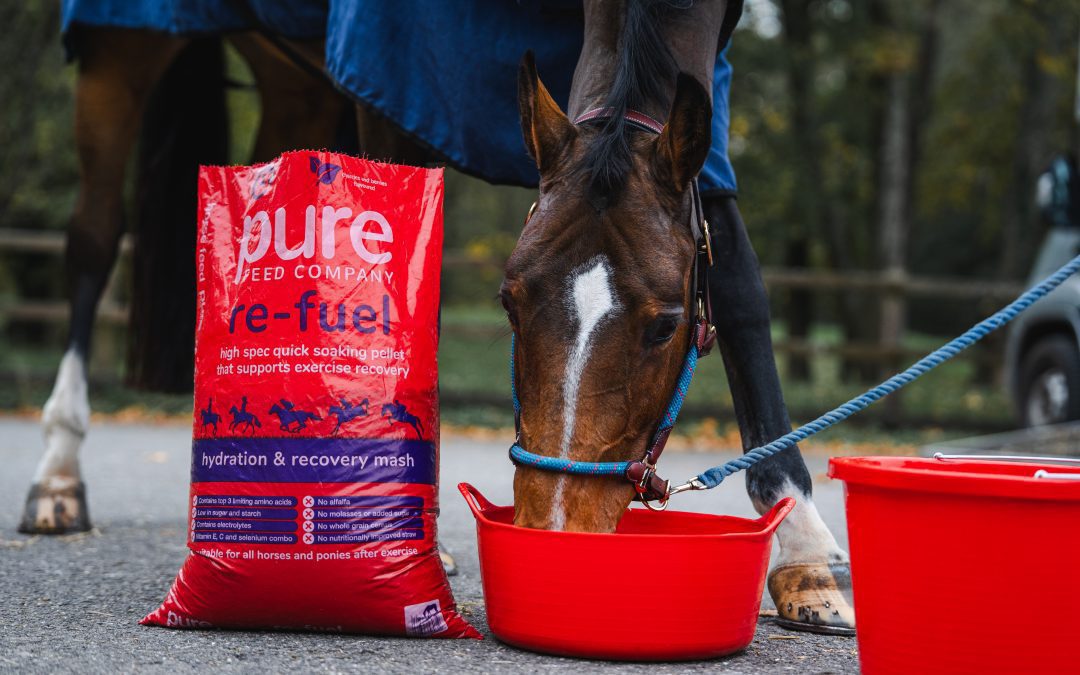
Recovery following heat stress is just as important as exercise recovery and the two go hand in hand. It is important to use appropriate cooling practices to reduce your horse’s temperature after exercise. Find a shady spot with plenty of airflow to provide a cool environment. Cool hose or sponge your horse off to remove built up sweat and cool superficial soft tissue. Provide unlimited access to fresh, clean water to allow your horse to replenish what they have lost in sweat. Feed a recovery mash such as Pure Refuel which allows you to support hydration and improve electrolyte balance.
Some common recovery mistakes to avoid are:
Giving Electrolytes without Acces to Water
Electrolytes are important for hydration as they make the horse want to drink. Providing these without providing water will create a thirsty horse at higher risk of dehydration
Working Unfit Horses too Hard
Unfit horses will deplete more of their energy reserves and build up more lactic acid that fit horses. This makes them less able to recovery quickly
Ignoring Mild Dehydration
Mild dehydration can be fixed quickly before it becomes a bigger concern. Allow your horse to take a break and drink if needed
Hydration
Horses typically drink 20-55 litres of water per day, but this varies depending on their exercise level, how hot or humid the weather is, if they have travelled or undergone a period of stress and if they are consuming high forage and/or high salt diets. It is important to know how much your horse typically drinks to allow you to prepare for times when they will require more water than normal so they don’t run out!
Signs of dehydration to look out for include:
- Dry/tacky gums
- Slow skin tenting
- Dark urine
- Reduce manure output
- Fatigue and poor recovery
- Elevated heart rate/slow to return to normal
Providing electrolytes is important to boosting hydration and aiding recovery. Horse’s lose more minerals in their sweat than humans which makes their sweat particularly salty. This also puts them at higher risk of dehydration after a period of sweating. Horse’s lose large amounts of sodium, chloride and potassium as well as smaller amounts of calcium and magnesium. Providing plain water alone will not fully restore fluid balance if their electrolytes are depleted. As such, feeding a recovery mash that contains electrolytes or adding some to your horse’s water (alongside access to plain water) will further support hydration and, therefore, recovery.
For more information on recovery and hydration, check out the following link to Pure Refuel, our recovery mash aimed at supporting the whole horse post-exercise:
