
FEED ADVICE – HEALTH
Understanding Tying Up in horses
Tying Up, also known as exertional rhabdomyolysis is the most common muscle disorder seen in horses resulting in muscle damage and poor performance. Tying up is primarily seen in sport horses where episodes can range from mild muscle cramps to severe muscle breakdown and damage. Although distressing, tying up can be managed effectively through diet and routine.
Key Highlights

Tying up is also known as exertionalrhabdomyolysis, Monday Morning Disease, and azoturia.
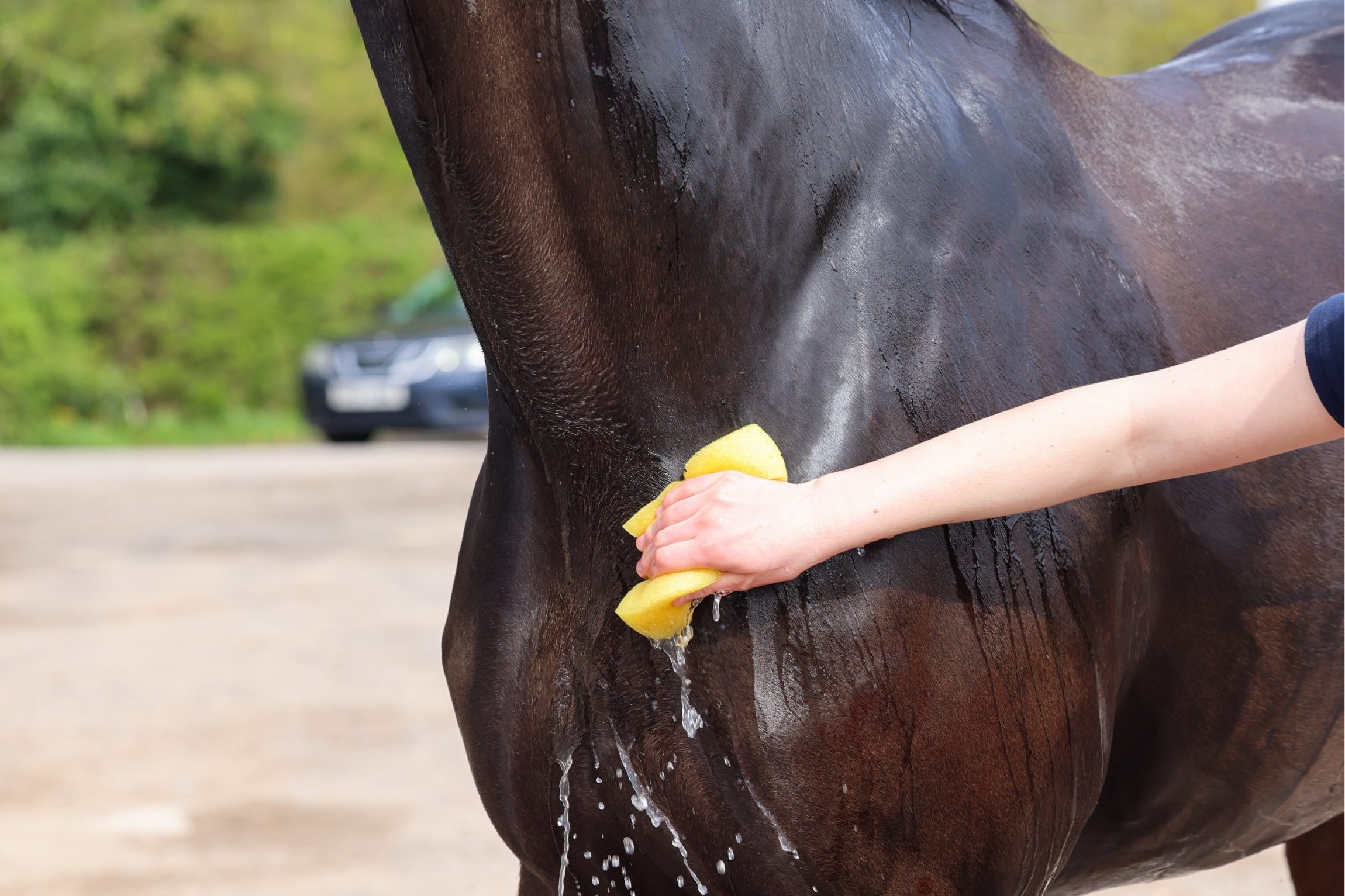
It is characterised by muscle damage and the resulting in pain, spasms and stiffness.
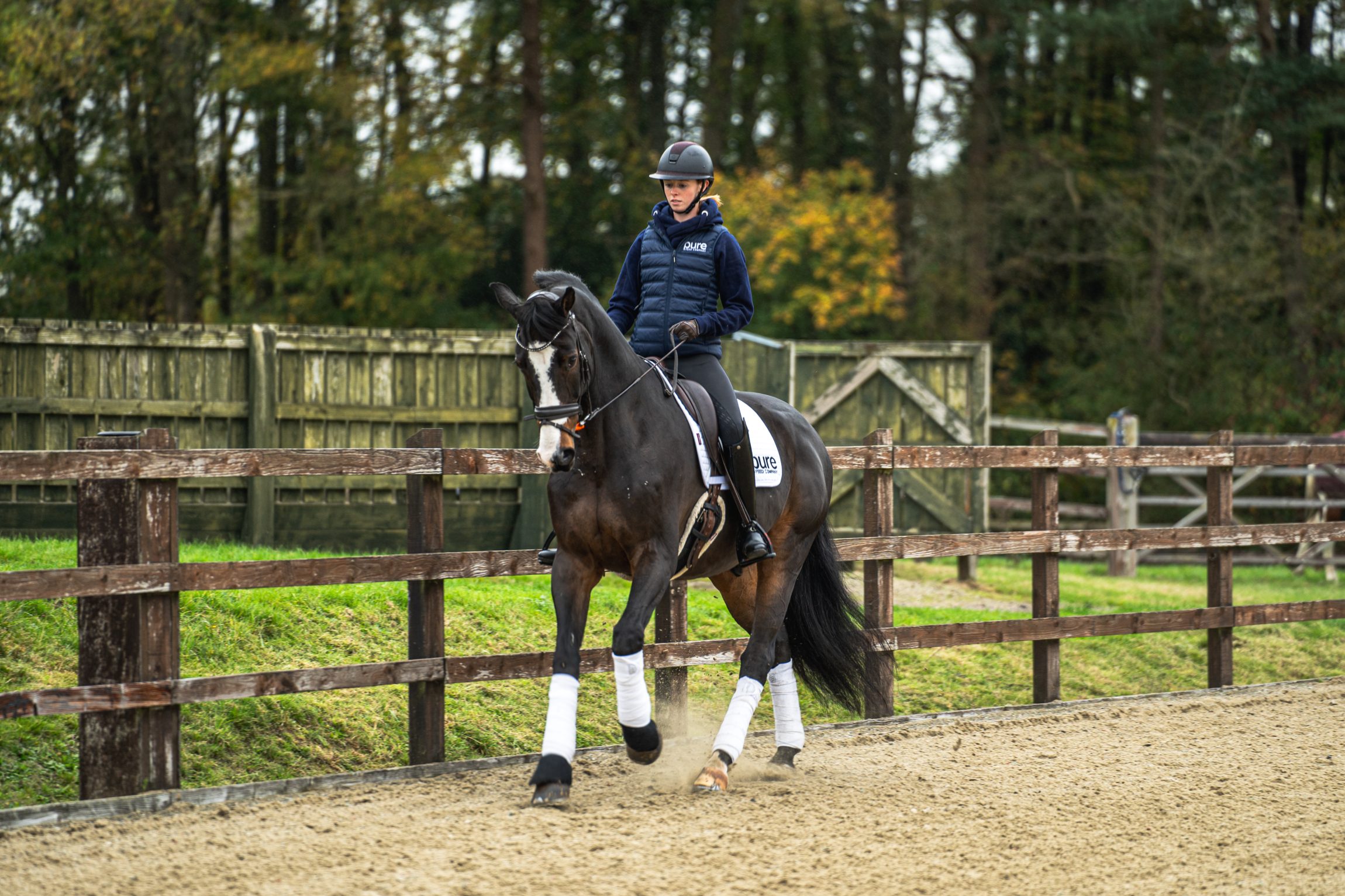
Genetic factors, dietary imbalances, and overtaining are some of the causes behind tying up in horses.
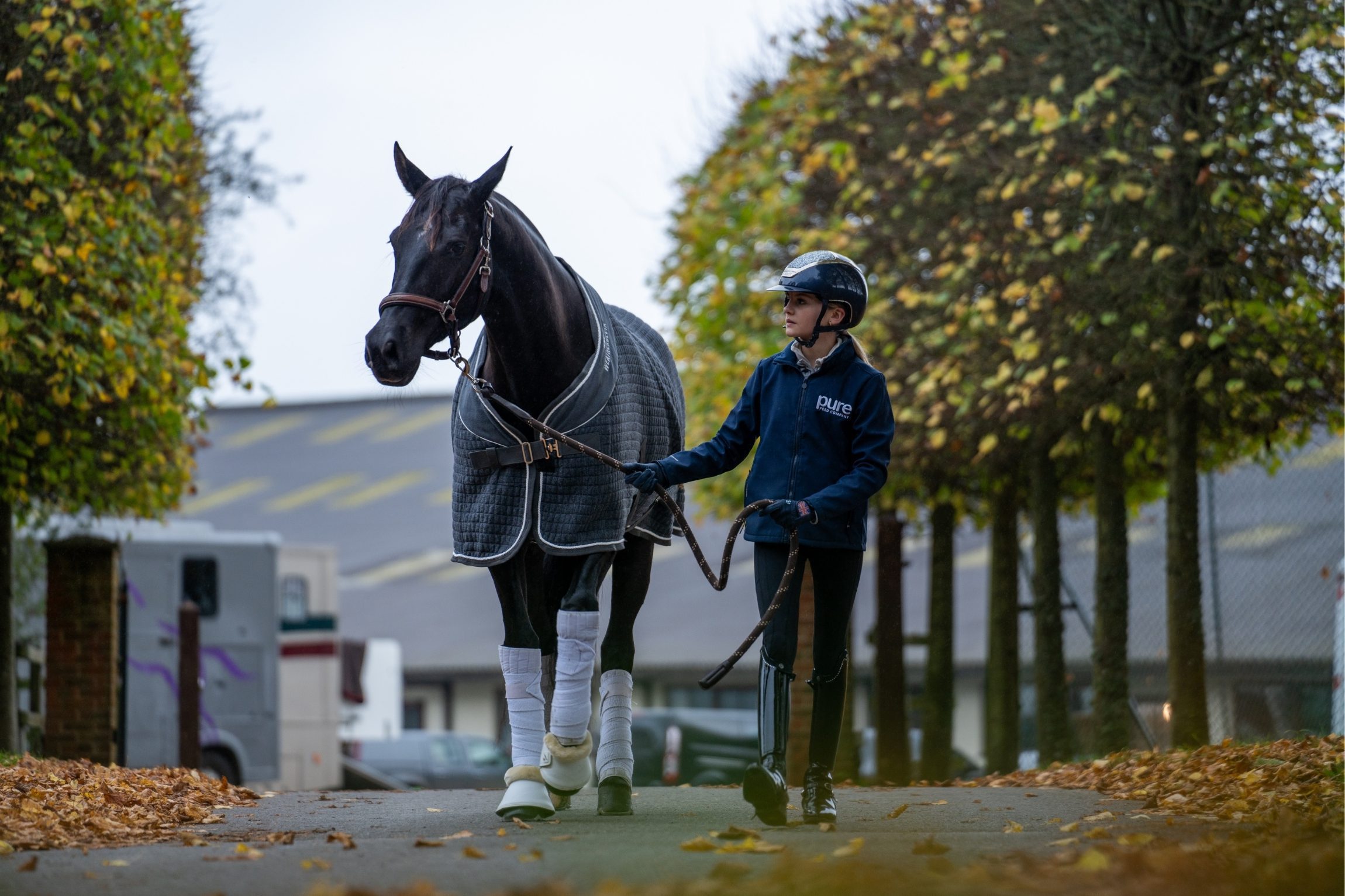
Immediate actions during an episode of tying up include pain relief, muscle relaxtion and blood tests.
Understanding Tying Up
Tying Up is essentially extreme muscle cramping. It is characterized by muscle damage and the breakdown of muscle cells, leading to the release of muscle enzymes into the bloodstream. This condition is often triggered by intense exercise or exertion beyond the horse’s training level. The excessive strain on the muscles can result in muscle pain, stiffness, and lameness.
Tying Up arises from a combination of genetic predispositions, environmental triggers, and management factors, including:


Recognising clinical signs of Tying Up
Recognising the signs of Tying Up is essential for prompt intervention and management, as early recognition may improve outcomes and minimize long-term complications:
Diagnosis of Tying Up
Diagnosis of tying up in horses involves several diagnostic approaches. Veterinary examination focuses on observing clinical signs such as muscle stiffness, pain, gait abnormalities, sweating, and any history of previous tying up episodes after exercise. A detailed history is essential, covering the horse’s exercise routine, diet, management practices, and past episodes of tying up.
Blood tests are crucial, measuring muscle enzymes like creatine kinase (CK) and aspartate aminotransferase (AST) to detect muscle damage, typical in tying up cases. Interpreting enzyme levels can be challenging, as even asymptomatic horses may show elevated levels post-exercise. Horses with chronic tying up may exhibit persistently high CK and AST levels at rest.
Urinalysis reviews the myoglobin content in the urine, which if found, indicates severe muscle damage. A muscle biopsy may be necessary in severe or recurrent cases, examining muscle tissue for damage or abnormalities under a microscope. Measuring electrolyte excretion (sodium, potassium, calcium, phosphorus, chloride) can identify horses with abnormal electrolyte absorption. It’s crucial to collect samples when the horse is stable and consuming its normal diet.
To ensure an accurate diagnosis, other potential causes of muscle pain and stiffness, such as lameness or neurological issues, are ruled out through comprehensive clinical examination and diagnostic tests.
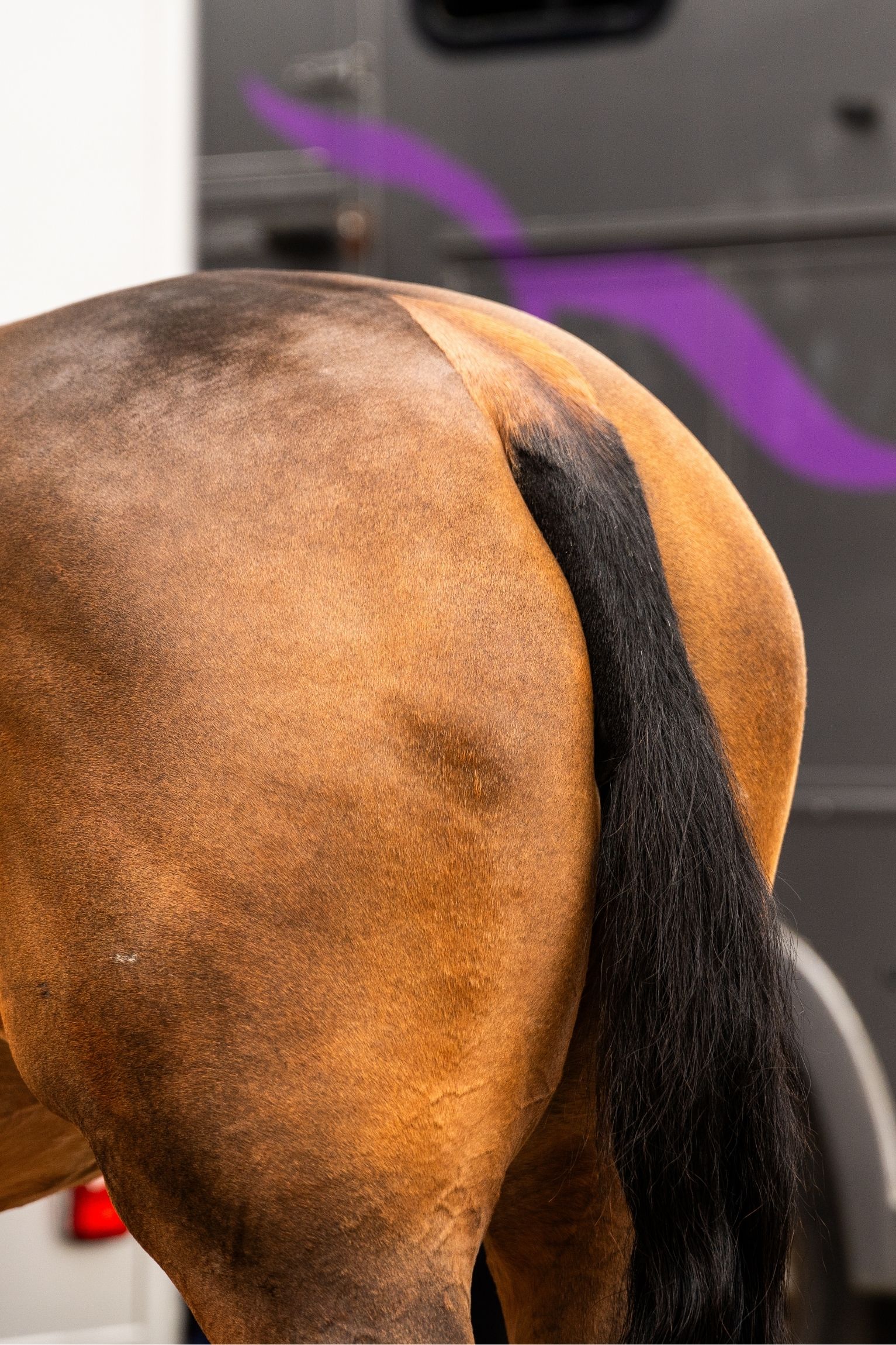
Treating a Horse with Tying Up
Treatment for a horse that has experienced tying up focuses on relieving muscle pain and inflammation and promoting muscle recovery. If your horse ties up the following steps should be followed:
Move the horse to a stable – do not make the horse travel far as tying up in an incredibly painful condition and excessive movement can exacerbate the condition
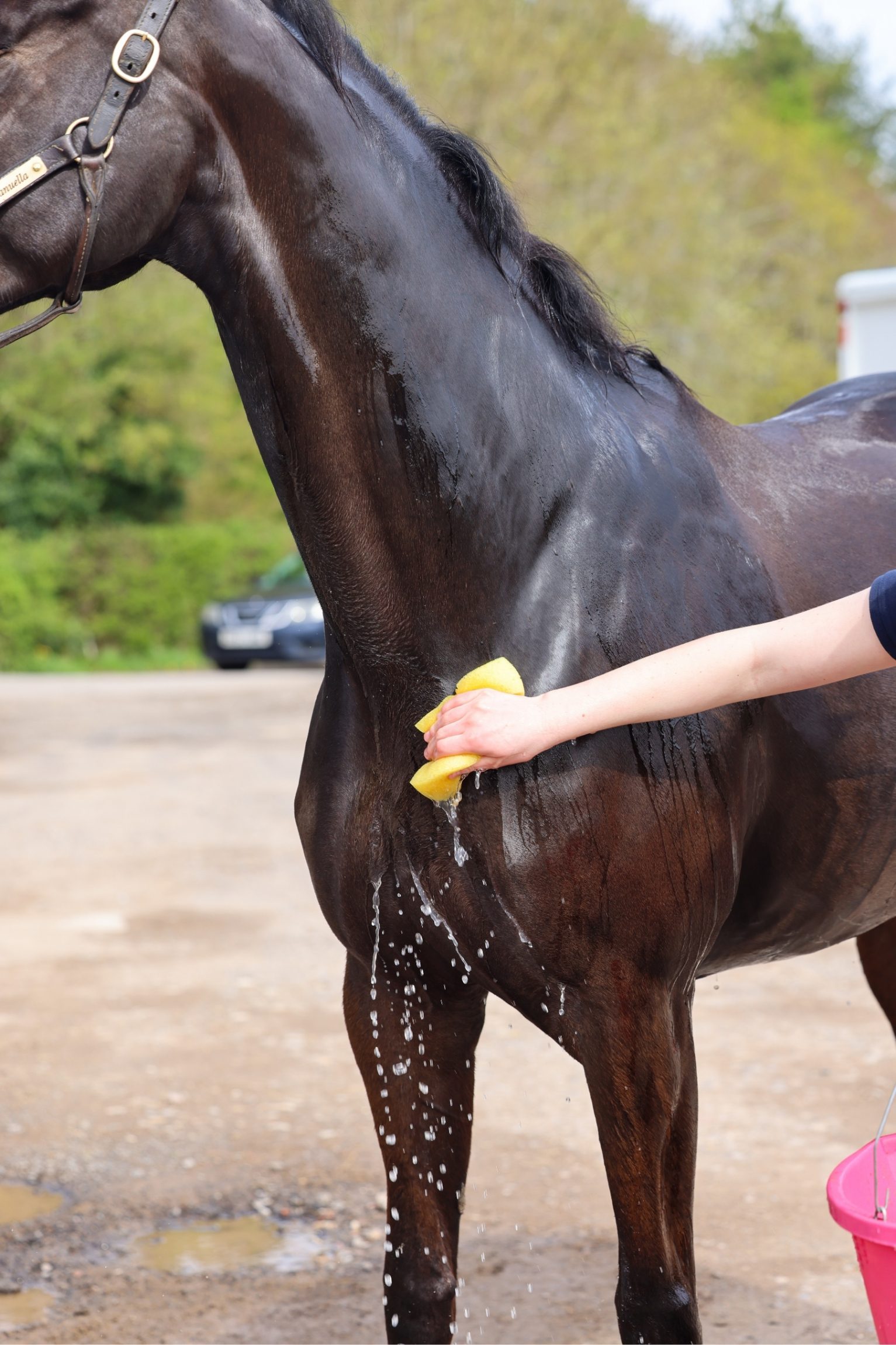
If the horse is warm apply cold water or cold packs to affected muscle groups to reduce inflammation and alleviate pain. If it is colder weather, place a rug on the horse to avoid the need to shiver. Avoid excessive rubbing or massaging, which can further irritate muscles.
Once the vet arrives, they might:
- Offer Pain Relief: Non-steroidal anti-inflammatory drugs (NSAIDs), such as phenylbutazone (bute) or flunixin meglumine (Banamine), may be administered to relieve pain and reduce inflammation.
- Provide Fluid Therapy: Intravenous fluids may be necessary to maintain hydration and support kidney function, especially if myoglobinuria (dark urine) indicates significant muscle damage.
- Offer Sedation: drugs such as Acepromazine and xylazine can be offered to alleviate acute pain and discomfort. These medications help relax tense muscles, reducing spasms and stiffness that contribute to the horse’s pain
Management and Prevention Strategies
Effective management and prevention strategies can help minimise the occurrence of tying up in horses and promote overall muscle health.
Long-term dietary adjustments, developing a sustainable exercise routine, avoiding overtraining, and implementing stress management techniques are crucial for preventing episodes of tying up.
Dietary Adjustments:
Balanced Diet: Providing a balanced diet rich in high-quality forage, appropriate levels of energy, protein, vitamins, and minerals supports overall health, muscle function, and athletic performance in horses prone to ER.
Supplemental Vitamin E and Selenium: Supplementation with vitamin E and selenium, either through balanced feeds, mineral supplements, or oral supplements, helps support antioxidant defences, protect against oxidative stress, and reduce the risk of muscle damage associated with ER.
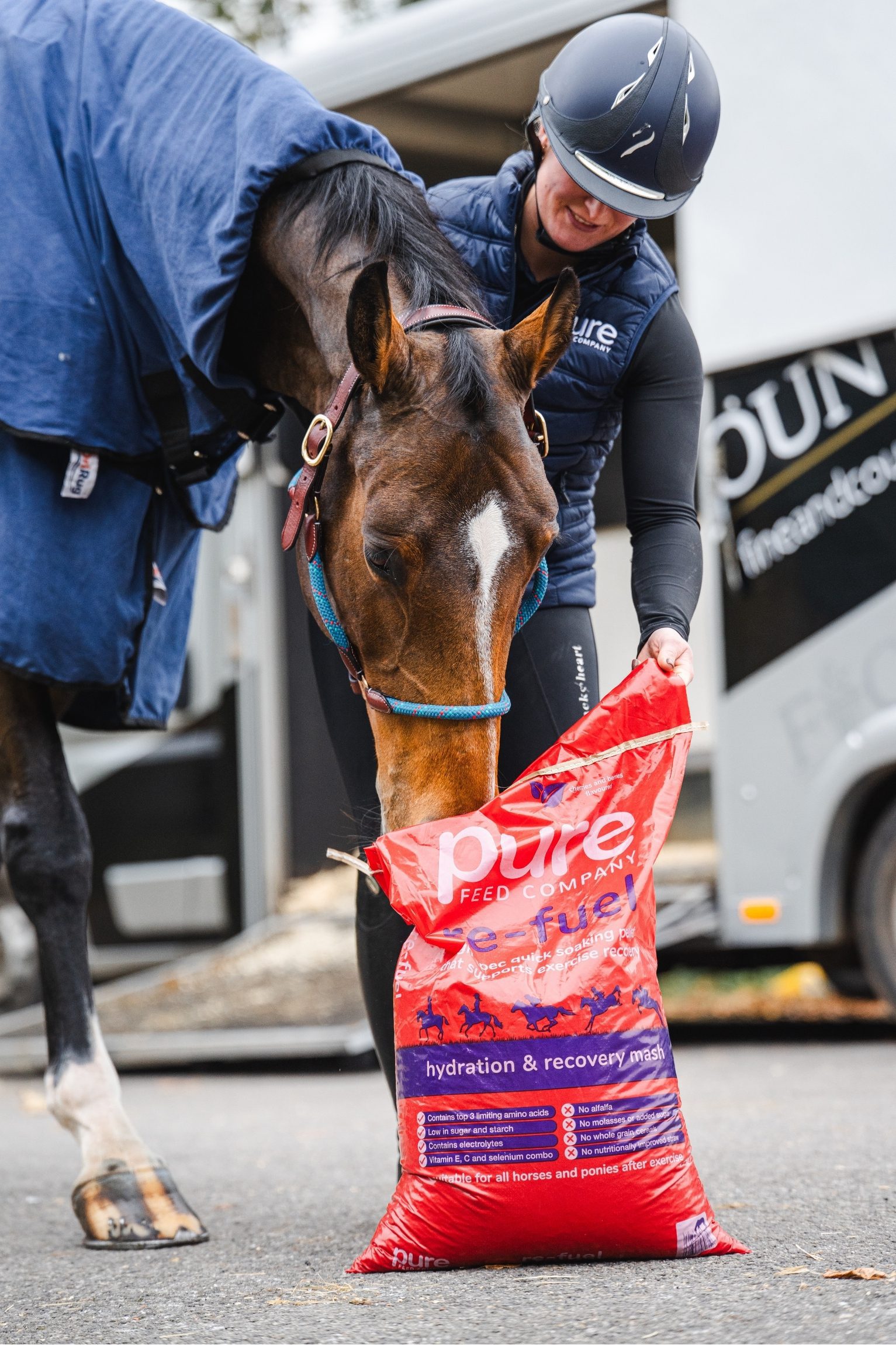
Did you know our ReFuel contains vitamin E and Selenium? Ideal for helping support your horse’s muscles.
Amino Acid Supplementation: Essential amino acids, such as lysine, methionine, and branched-chain amino acids (BCAAs), play critical roles in muscle protein synthesis, repair, and recovery, making them valuable additions to the diets of horses prone to ER.
Did you know all our complete feeds contain lysine and methionine?
Electrolyte Balance: Maintaining electrolyte balance through appropriate supplementation, particularly during periods of increased sweating or intense exercise, helps support muscle function, hydration, and acid-base balance, reducing the risk of muscle cramping and fatigue associated with ER.
Did you know that regular electrolyte supplements can be abrasive to the digestive system and companies must add a lot of sugar to make them palatable? That is why our Pure Electrolytes are fat coated, to make sure they are more bioavailable to the horse and kinder on the digestive system.
Omega-3 Fatty Acids: Supplementation with omega-3 fatty acids, derived from sources such as fish oil or linseed oil, may help modulate inflammatory responses, support cardiovascular health, and enhance muscle recovery in horses prone to ER.
Did you know all our feeds contain micronized linseed? We even sell Pure Linseed for horses that require a little bit extra!

Developing a Sustainable Routine
Developing a sustainable exercise routine is crucial in managing and preventing tying up in horses. Strenuous exercise without proper conditioning and rest periods can increase the risk of muscle damage and tying up.
Start with low-intensity activities such as walking and light trotting, gradually increasing the duration and intensity of workouts as the horse’s fitness improves. Avoid sudden, intense exercise sessions, as these can trigger episodes of tying up. Additionally, ensure the horse has adequate warm-up and cool-down periods to promote muscle flexibility and circulation. Incorporate rest days and monitor the horse’s response to exercise closely, adjusting the program as needed. Providing a balanced diet with sufficient electrolytes and ensuring proper hydration can also help manage the condition.
Horses prone to tying up benefit from a regular, consistent exercise routine, but this does not necessarily mean they should work daily from a regular, consistent exercise routine, but this does not necessarily mean they should work every day. Daily exercise can help maintain muscle function and prevent episodes of tying up by promoting steady muscle metabolism and preventing the buildup of lactic acid. However, the intensity and duration of exercise should be carefully managed. Incorporate rest days or very light activity days to allow the horse’s muscles to recover. This is especially important if the horse shows any signs of stiffness or discomfort.
Conclusion
In conclusion, understanding why horses tie up is crucial for their well-being. From recognising the signs to implementing management and prevention strategies. Genetic factors, dietary imbalances, and overtraining play significant roles in this condition. By taking immediate actions, making dietary adjustments, and managing stress, you can help minimise the risk.
Featured products to help with Tying Up
Made in the UK
We are proud to say that all of our feeds are produced here in the UK
FREE Shipping
We offer FREE SHIPPING for all orders in the UK with 15 bags and over*
Sustainable
We are dedicated to playing our part in making the world more sustainable

100% Natural
We use high-quality ingredients and no unnecessary additives.
Thousands of people love our feeds

Good nutrition is about the details. 🐎
That’s why all of our complete feeds contain biotin as part of their carefully balanced formulation.
Pure Feed complete feeds are designed to provide horses with the vitamins, minerals and nutrients they need in one balanced ration, making feeding simple while supporting overall wellbeing.
Whether you’re feeding a good doer, a performance horse or a veteran, you can be confident they’re getting complete, balanced nutrition in every bag.
💬 Hands up if you love a feed that keeps things simple at feeding time.
Good nutrition is about the details. 🐎
That’s why all of our complete feeds contain biotin as part of their carefully balanced formulation.
Pure Feed complete feeds are designed to provide horses with the vitamins, minerals and nutrients they need in one balanced ration, making feeding simple while supporting overall wellbeing.
Whether you’re feeding a good doer, a performance horse or a veteran, you can be confident they’re getting complete, balanced nutrition in every bag.
💬 Hands up if you love a feed that keeps things simple at feeding time.
Do you feed before riding? 🥕
Even a small amount of Pure Feed forms a light layer of fibre in your horse’s stomach. The chaff encourages chewing, which produces saliva 👉 a natural buffer against stomach acid. This “fibre mat” helps shield the sensitive upper stomach lining from acid splash during exercise.
Just a small feed 30–60 minutes before your ride can make your horse more comfortable, focused, and ready to perform 🐴✨
Do you feed before riding? 🥕
Even a small amount of Pure Feed forms a light layer of fibre in your horse’s stomach. The chaff encourages chewing, which produces saliva 👉 a natural buffer against stomach acid. This “fibre mat” helps shield the sensitive upper stomach lining from acid splash during exercise.
Just a small feed 30–60 minutes before your ride can make your horse more comfortable, focused, and ready to perform 🐴✨
Do you have a good doer who gains weight just by looking at food, but could do with a little extra oomph in the saddle? 🐎✨
We might have the perfect solution! Combine two of our feeds:
Pure Balance – our low-calorie, high-spec balancer, fed at the full recommended serving.
Pure Performance – add just half a scoop when you ride or whenever extra energy is needed.
The result? Fast-release energy from Pure Performance to get your horse moving, without tipping the calorie balance, plus all the vitamins, minerals and extra goodness from Pure Balance to keep them feeling great inside and out!
🙌 Hands up who else has a good doer that gains weight just by looking at food?
Do you have a good doer who gains weight just by looking at food, but could do with a little extra oomph in the saddle? 🐎✨
We might have the perfect solution! Combine two of our feeds:
Pure Balance – our low-calorie, high-spec balancer, fed at the full recommended serving.
Pure Performance – add just half a scoop when you ride or whenever extra energy is needed.
The result? Fast-release energy from Pure Performance to get your horse moving, without tipping the calorie balance, plus all the vitamins, minerals and extra goodness from Pure Balance to keep them feeling great inside and out!
🙌 Hands up who else has a good doer that gains weight just by looking at food?
⚡ Does your horse need slow-release or fast-release energy? 🐎
Not all energy in horse feed behaves the same way, and it can make a big difference to how your horse feels and performs.
Feeds high in starch and sugar can provide quick-release energy. For some horses, that can mean extra sparkle you weren’t quite asking for.
Energy from fibre and oil, on the other hand, is released more slowly. That means steady stamina, better focus and controlled energy, ideal for horses in work without the unwanted fizz.
At Pure Feed, our complete feeds are built around fibre-based, slow-release energy, so you can fuel performance while helping keep your horse balanced and rideable.
💬 We’d love to know: Have you found certain feeds suit your horse better than others? Let us know below 👇
If you’re unsure what’s best for your horse, you can also get a free personalised recommendation using our online Diet Plan 💙
⚡ Does your horse need slow-release or fast-release energy? 🐎
Not all energy in horse feed behaves the same way, and it can make a big difference to how your horse feels and performs.
Feeds high in starch and sugar can provide quick-release energy. For some horses, that can mean extra sparkle you weren’t quite asking for.
Energy from fibre and oil, on the other hand, is released more slowly. That means steady stamina, better focus and controlled energy, ideal for horses in work without the unwanted fizz.
At Pure Feed, our complete feeds are built around fibre-based, slow-release energy, so you can fuel performance while helping keep your horse balanced and rideable.
💬 We’d love to know: Have you found certain feeds suit your horse better than others? Let us know below 👇
If you’re unsure what’s best for your horse, you can also get a free personalised recommendation using our online Diet Plan 💙
Your horse’s gut does a lot more than just “digest feed” ➡️ it’s responsible for nutrient absorption, immune support, behaviour, condition, performance… everything starts there.
The horse’s digestive system is designed for a near-constant intake of fibre, with fermentation in the hindgut supplying a significant proportion of their energy. When diets are high in starch or contain unnecessary additives, we can disrupt that delicate microbial balance and that’s when we start to see issues with condition, behaviour and consistency.
At Pure Feed, every formulation is built around supporting optimal digestive function. Our feeds are:
• Molasses free
• Cereal free (bar our Pure Performance)
• Alfalfa free
• Mould inhibitor free
Instead of relying on cereals for energy, we use highly digestible fibre sources and oil to provide slow-release energy that works in harmony with the hindgut. Each feed is fully balanced with vitamins and minerals, so you’re not layering multiple products on top.
The result? A more stable energy profile, efficient nutrient utilisation, and support for the microbiome. All from a feeding system designed to reflect how horses are meant to eat.
Every horse is different; let us build a diet plan that actually suits yours. Comment PLAN below to recieve a link to our diet plan service 🩵
Your horse’s gut does a lot more than just “digest feed” ➡️ it’s responsible for nutrient absorption, immune support, behaviour, condition, performance… everything starts there.
The horse’s digestive system is designed for a near-constant intake of fibre, with fermentation in the hindgut supplying a significant proportion of their energy. When diets are high in starch or contain unnecessary additives, we can disrupt that delicate microbial balance and that’s when we start to see issues with condition, behaviour and consistency.
At Pure Feed, every formulation is built around supporting optimal digestive function. Our feeds are:
• Molasses free
• Cereal free (bar our Pure Performance)
• Alfalfa free
• Mould inhibitor free
Instead of relying on cereals for energy, we use highly digestible fibre sources and oil to provide slow-release energy that works in harmony with the hindgut. Each feed is fully balanced with vitamins and minerals, so you’re not layering multiple products on top.
The result? A more stable energy profile, efficient nutrient utilisation, and support for the microbiome. All from a feeding system designed to reflect how horses are meant to eat.
Every horse is different; let us build a diet plan that actually suits yours. Comment PLAN below to recieve a link to our diet plan service 🩵
Not too much, not too little – just right. 🐴
Pure Working sits perfectly in our Pure Feed range as a medium-calorie, medium-level feed, ideal for horses in regular work or those on box rest who need extra support gaining weight. Balanced, gut-friendly, and designed to keep your horse in top condition without overdoing it.
Not too much, not too little – just right. 🐴
Pure Working sits perfectly in our Pure Feed range as a medium-calorie, medium-level feed, ideal for horses in regular work or those on box rest who need extra support gaining weight. Balanced, gut-friendly, and designed to keep your horse in top condition without overdoing it.
Your feed board shouldn’t look like a chemistry lab 🧪
Yet here we are: tubs, balancers, 3 chaffs, multiple supplements… and still guessing if your horse is actually getting what they need.
With Pure Feed, it’s simple:
✅ One feed
✅ One scoop
✅ Everything your horse needs — perfectly balanced, every time
Less clutter, less guesswork.
🔗 Click the link in bio for our free diet plan tool to make feeding this easy.
Your feed board shouldn’t look like a chemistry lab 🧪
Yet here we are: tubs, balancers, 3 chaffs, multiple supplements… and still guessing if your horse is actually getting what they need.
With Pure Feed, it’s simple:
✅ One feed
✅ One scoop
✅ Everything your horse needs — perfectly balanced, every time
Less clutter, less guesswork.
🔗 Click the link in bio for our free diet plan tool to make feeding this easy.
Many horse owners focus on feed labels and see “<10% sugar + starch” and assume it’s automatically safe for any horse. But the truth is, percentage values alone don’t give the full picture. What really matters is the actual grams of sugar and starch a horse consumes per meal relative to their bodyweight.
Here’s an example:
Feed A: 10% sugar + starch, fed at 500g → 50g sugar + starch
Feed B: 10% sugar + starch, fed at 2kg → 200g sugar + starch
Even though both feeds have the same percentage, Feed B delivers four times more sugar and starch in one meal. That’s a huge difference for your horse’s digestion, energy levels, and risk of conditions like laminitis or colic.
Breaking feed into smaller, more frequent meals keeps sugar and starch intake lower at any one time, supporting stable energy levels and better digestive health. Nutritionists always calculate sugar and starch per kg of bodyweight per meal, not just per day, and consider the whole diet, including forage, treats, and grazing.
💡 Try calculating your horse’s sugar + starch intake this week
Many horse owners focus on feed labels and see “<10% sugar + starch” and assume it’s automatically safe for any horse. But the truth is, percentage values alone don’t give the full picture. What really matters is the actual grams of sugar and starch a horse consumes per meal relative to their bodyweight.
Here’s an example:
Feed A: 10% sugar + starch, fed at 500g → 50g sugar + starch
Feed B: 10% sugar + starch, fed at 2kg → 200g sugar + starch
Even though both feeds have the same percentage, Feed B delivers four times more sugar and starch in one meal. That’s a huge difference for your horse’s digestion, energy levels, and risk of conditions like laminitis or colic.
Breaking feed into smaller, more frequent meals keeps sugar and starch intake lower at any one time, supporting stable energy levels and better digestive health. Nutritionists always calculate sugar and starch per kg of bodyweight per meal, not just per day, and consider the whole diet, including forage, treats, and grazing.
💡 Try calculating your horse’s sugar + starch intake this week
At Pure Feed, we believe performance starts with the right nutrition. Jam is usually fuelled by Fibre Balance, but Meg choses to switch to our Pure Performance right before a big competition to make sure Jam has the energy she needs 💪
Want to learn how Pure Feed can make a difference to your horse’s routine ? Tap the link in our bio to take our free diet plan!
At Pure Feed, we believe performance starts with the right nutrition. Jam is usually fuelled by Fibre Balance, but Meg choses to switch to our Pure Performance right before a big competition to make sure Jam has the energy she needs 💪
Want to learn how Pure Feed can make a difference to your horse’s routine ? Tap the link in our bio to take our free diet plan!
Low-calorie feeding, science-backed 🧬
Managing condition doesn’t mean compromising nutrition. Our low-calorie complete range gives targeted, balanced nutrition while keeping calories controlled:
🔹 Pure Balance – High-spec balancer pellet for muscle, topline & metabolic health
🔹 Pure Fibre Balance – Balancer + fibre chaff for gut support & slow-release fibre
🔹 Pure Easy – Higher-energy, low calorie complete feed
💻 Take the guesswork out 👉 try our Free Diet Plan & get a tailored programme for your horse:
🔗 Link in bio
Low-calorie feeding, science-backed 🧬
Managing condition doesn’t mean compromising nutrition. Our low-calorie complete range gives targeted, balanced nutrition while keeping calories controlled:
🔹 Pure Balance – High-spec balancer pellet for muscle, topline & metabolic health
🔹 Pure Fibre Balance – Balancer + fibre chaff for gut support & slow-release fibre
🔹 Pure Easy – Higher-energy, low calorie complete feed
💻 Take the guesswork out 👉 try our Free Diet Plan & get a tailored programme for your horse:
🔗 Link in bio
With the event season starting soon, many horses’ work has started increasing, but have you thought about how your feeding can limit your horse’s performance? Here’s what to watch out for:
❌ Too much cereal → spikes blood sugar, increases excitability, and stresses digestion
❌ Too little fibre → reduces chewing time, gut motility, and microbiome health
❌ Imbalanced protein / amino acids → slows muscle repair and topline growth
✅ Science-backed feeding fixes:
• Balanced calories for energy without fizz
• Fibre to support gut health and slow-release energy
• Correct amino acids for muscle repair and strength
With the event season starting soon, many horses’ work has started increasing, but have you thought about how your feeding can limit your horse’s performance? Here’s what to watch out for:
❌ Too much cereal → spikes blood sugar, increases excitability, and stresses digestion
❌ Too little fibre → reduces chewing time, gut motility, and microbiome health
❌ Imbalanced protein / amino acids → slows muscle repair and topline growth
✅ Science-backed feeding fixes:
• Balanced calories for energy without fizz
• Fibre to support gut health and slow-release energy
• Correct amino acids for muscle repair and strength
We’re increasingly choosing less processed food for ourselves because we understand how additives can impact our digestive system and overall well-being. The same principle applies to our horses.
That’s why Pure Feed is mould inhibitor free.
Instead of relying on chemical preservatives, we prioritise ingredient quality, controlled storage, and specially produced porous bags to maintain freshness and nutritional integrity. This helps support the hindgut environment and avoids unnecessary exposure to additives that can disrupt the delicate balance of the equine microbiome.
👉 Switch to evidence-led feeding; discover the Pure Feed range now
We’re increasingly choosing less processed food for ourselves because we understand how additives can impact our digestive system and overall well-being. The same principle applies to our horses.
That’s why Pure Feed is mould inhibitor free.
Instead of relying on chemical preservatives, we prioritise ingredient quality, controlled storage, and specially produced porous bags to maintain freshness and nutritional integrity. This helps support the hindgut environment and avoids unnecessary exposure to additives that can disrupt the delicate balance of the equine microbiome.
👉 Switch to evidence-led feeding; discover the Pure Feed range now
Feeding your horse doesn’t have to be so confusing💡
A complete feed gives your horse everything they need in one scoop: gut-friendly fibre, energy, protein, vitamins & minerals, without the stress of juggling multiple buckets.
We have a complete feed for every horse:
✔ Good doers
✔ Poor doers
✔ Leisure or competition horses
✔ Sensitive or digestive-prone types
💬 Got a friend who overcomplicates feeding? Tag them!
Feeding your horse doesn’t have to be so confusing💡
A complete feed gives your horse everything they need in one scoop: gut-friendly fibre, energy, protein, vitamins & minerals, without the stress of juggling multiple buckets.
We have a complete feed for every horse:
✔ Good doers
✔ Poor doers
✔ Leisure or competition horses
✔ Sensitive or digestive-prone types
💬 Got a friend who overcomplicates feeding? Tag them!
Did you know that all of our complete feeds contain Vitamin A? 🧬
Essential for your horse’s health, vitamin A supports:
👀 Vision
🛡️ Immune system
✨ Skin, coat & mucous membranes
📈 Growth & reproduction
Even with good forage, intake can vary, our complete feeds provide consistent, bioavailable vitamin A every day.
💬 Questions about vitamins in your feed? Drop them below!
Did you know that all of our complete feeds contain Vitamin A? 🧬
Essential for your horse’s health, vitamin A supports:
👀 Vision
🛡️ Immune system
✨ Skin, coat & mucous membranes
📈 Growth & reproduction
Even with good forage, intake can vary, our complete feeds provide consistent, bioavailable vitamin A every day.
💬 Questions about vitamins in your feed? Drop them below!
Forget juggling powders, syrups, and electrolytes after every ride; Refuel makes recovery simple and effective in one complete feed.
Here’s what it does:
🔹 Replenishes electrolytes lost in sweat to support hydration and muscle function
🔹 Supports muscle repair with high-quality, digestible protein
🔹 Packed with antioxidants to reduce oxidative stress and speed recovery
Tap the link in bio to learn more about Refuel today!
Forget juggling powders, syrups, and electrolytes after every ride; Refuel makes recovery simple and effective in one complete feed.
Here’s what it does:
🔹 Replenishes electrolytes lost in sweat to support hydration and muscle function
🔹 Supports muscle repair with high-quality, digestible protein
🔹 Packed with antioxidants to reduce oxidative stress and speed recovery
Tap the link in bio to learn more about Refuel today!
🧬 Protein isn’t just protein 👉 it’s what builds muscle, improves topline & fuels recovery.
🔹Low levels of limiting amino acids like lysine, methionine & threonine can slow muscle repair
🔹 Highly digestible plant proteins fuel growth without overloading the gut
🔹 Optimised blends minimise metabolic stress and maximise efficiency
👉 Tap the link in bio to see how Pure Feed fuels performance at the molecular level 🐴💪
🧬 Protein isn’t just protein 👉 it’s what builds muscle, improves topline & fuels recovery.
🔹Low levels of limiting amino acids like lysine, methionine & threonine can slow muscle repair
🔹 Highly digestible plant proteins fuel growth without overloading the gut
🔹 Optimised blends minimise metabolic stress and maximise efficiency
👉 Tap the link in bio to see how Pure Feed fuels performance at the molecular level 🐴💪
BCS 101 with Meg & Jam 🐴💪 Watch as we give a quick body condition score check and show you how to keep your horse in tip top shape!
With @horseandcountrytv, we’re excited to help Meg reach the top 🏆
#thepurefeedcompany #purefeed #purefeeddietplan #equinenutrition
BCS 101 with Meg & Jam 🐴💪 Watch as we give a quick body condition score check and show you how to keep your horse in tip top shape!
With @horseandcountrytv, we’re excited to help Meg reach the top 🏆
#thepurefeedcompany #purefeed #purefeeddietplan #equinenutrition
🌾 Did you know our complete feeds contain grass chaff?
It’s not just there for bulk, it’s science-backed fibre that actively supports your horse’s digestive:
🧪 Digestible fibre (NDF) keeps the gut moving efficiently, supporting normal hindgut function.
🧬 Encourages chewing and saliva production, which helps buffer stomach acid and protect the stomach lining.
🦠 Fuels the hindgut microbiome, feeding beneficial bacteria for better fermentation and nutrient absorption.
Including grass chaff means your horse gets consistent, functional fibre every day, even when hay quality or availability varies.
🌾 Did you know our complete feeds contain grass chaff?
It’s not just there for bulk, it’s science-backed fibre that actively supports your horse’s digestive:
🧪 Digestible fibre (NDF) keeps the gut moving efficiently, supporting normal hindgut function.
🧬 Encourages chewing and saliva production, which helps buffer stomach acid and protect the stomach lining.
🦠 Fuels the hindgut microbiome, feeding beneficial bacteria for better fermentation and nutrient absorption.
Including grass chaff means your horse gets consistent, functional fibre every day, even when hay quality or availability varies.