
FEED ADVICE – HEALTH
Essential Guide to Allergies in Horses
Equine allergies are an increasingly recognised health issue that can significantly impact a horse’s quality of life. Allergies occur when the horse’s immune system reacts to normally harmless substances, known as allergens, leading to various symptoms ranging from mild itching to severe respiratory distress. Common allergens for horses include environmental factors such as dust, pollen, mould, and insects, as well as dietary components like certain grains or alfalfa. Understanding the causes, symptoms, and management strategies for equine allergies is crucial for maintaining your horse’s well-being.
Key Highlights

Equine allergies are a common health issue, affecting horses of all breeds and ages.

Diagnosis involves clincial evalutation, allergy testing and elimination diets.

Common allergens include dust, pollen, mould, insects, and certain types of feed.
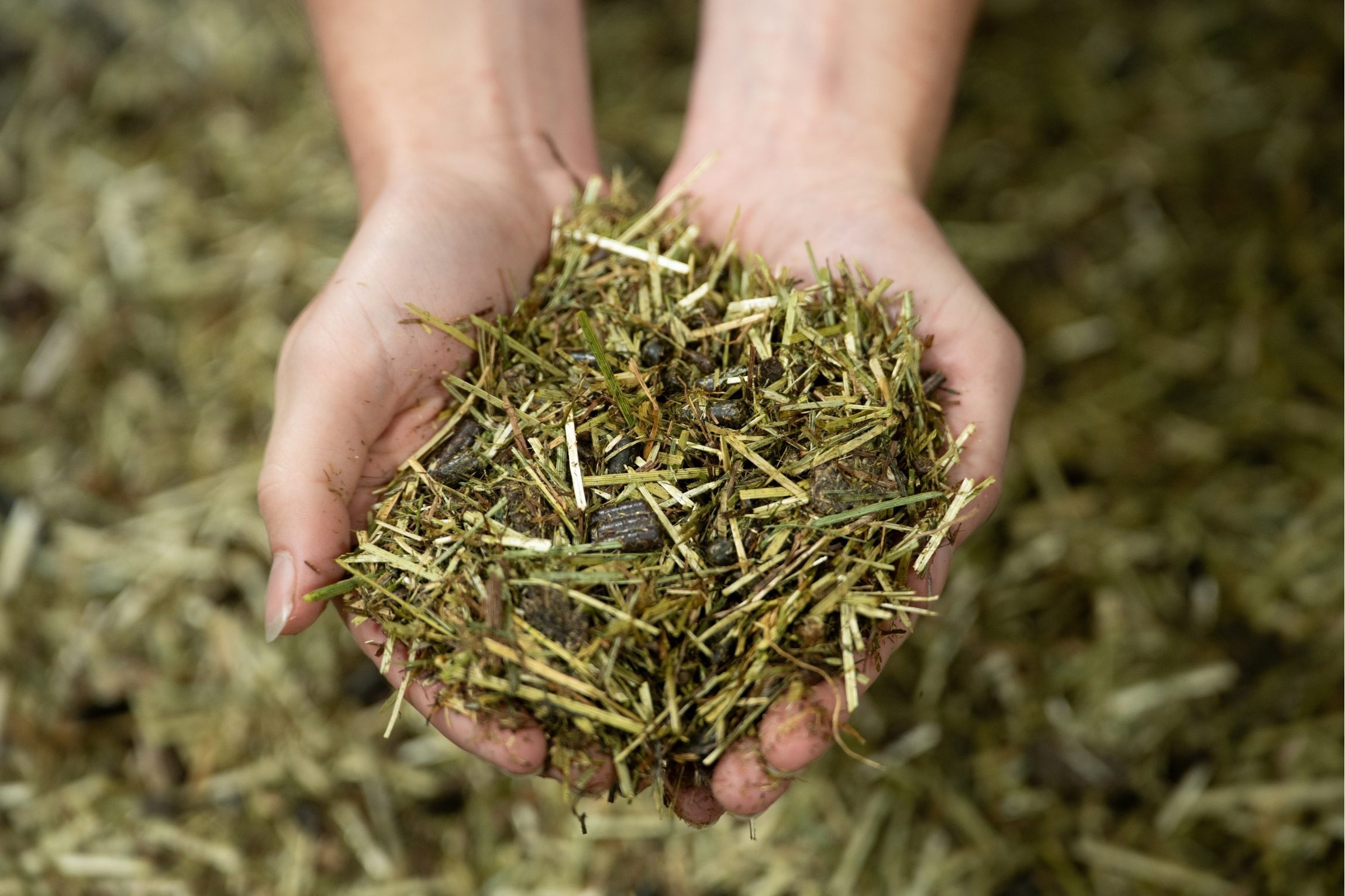
The Pure Feed mixes are alfalfa, soya and mould inhibitor free providing a dietary option for horses with allergies or intolerances.
Understanding Equine Allergies
Allergies in horses are hypersensitive immune responses to substances they encounter in their environment or diet. When a horse with allergies comes into contact with an allergen, its immune system produces antibodies, triggering an inflammatory response. This reaction can manifest in different ways, depending on the type of allergen and the individual horse’s sensitivity.
Equine allergies are typically categorised into three main types:
Respiratory Allergies
Often manifested as Recurrent Airway Obstruction (RAO), respiratory allergies are frequently caused by inhalation of allergens such as dust, mould spores, and pollen. The immune response leads to bronchoconstriction, increased mucus production, and airway inflammation, presenting clinically as coughing, nasal discharge, exercise intolerance, and laboured breathing.
Skin Allergies
Also known as atopic dermatitis, skin allergies including urticaria (hives), pruritus (itching), and dermatitis, may be triggered by direct contact with allergens, insect bites (e.g., Culicoides species causing sweet itch), or ingestion of allergenic feeds. The release of histamine and other inflammatory mediators from mast cells leads to skin irritation, hair loss, and in severe cases, self-trauma due to persistent scratching or rubbing.ingestion of certain allergens. Symptoms often include itching, hair loss, hives, and skin lesions.
Food Allergies or Intolerances
Dietary allergens such as alfalfa, soy, or specific grains can trigger gastrointestinal or systemic reactions. Symptoms may include colic, diarrhoea, chronic weight loss, or skin eruptions. Alfalfa is a notable allergen in horses, causing adverse reactions in a subset of the equine population.


Causes and Risk Factors of Equine Allergies
While the precise cause of equine allergies can vary, several risk factors have been identified:
Environmental Exposure
Horses exposed to high levels of airborne allergens like dust, pollen, and mould spores are at an increased risk of developing respiratory allergies. Inadequate stable ventilation, damp conditions, and poor-quality forage storage can exacerbate these issues.
Insect Hypersensitivity
Allergies to insect bites, particularly from Culicoides midges (sweet itch), are among the most common allergic conditions in horses. Insect saliva proteins trigger a type I hypersensitivity reaction, causing intense itching and dermatitis.
Dietary Components
Horses can develop food allergies or intolerances to specific ingredients in their feed, including alfalfa, grains, and certain protein sources. These reactions can lead to gastrointestinal distress, skin conditions, and systemic inflammation.
Genetic Predisposition
Certain breeds, such as Thoroughbreds, Warmbloods, and Arabians, show a higher incidence of allergies, suggesting a genetic component. Additionally, young horses and those with a history of previous allergic episodes may be more susceptible to developing new sensitivities.
Identifying Early Signs of Equine Allergies
Early detection of equine allergies is essential for effective management. Key signs to look out for include:
Respiratory Signs: coughing, nasal discharge, dyspnoea (difficulty breathing), and exercise intolerance are indicative of respiratory allergies like RAO.
Dermatologic Signs: Recurrent urticaria, pruritus, alopecia (hair loss), and dermatitis, particularly in areas exposed to insects or allergenic contact materials.
Gastrointestinal Signs: Symptoms such as diarrhoea, colic, or unexplained weight loss suggest food allergies or intolerances.
Behavioural Changes: Altered behaviour, such as irritability, lethargy, or reluctance to work, may be secondary to discomfort caused by allergic reactions.
If any of these signs are observed, it is important to consult a veterinarian for a thorough evaluation and appropriate diagnostic testing.

Diagnosing Equine Allergies
Diagnosing equine allergies can be challenging due to the variety of symptoms and potential allergens. A comprehensive approach is often necessary, including:

Clinical Examination
A comprehensive physical examination is conducted to assess signs of allergic disease, including respiratory, dermatologic, and gastrointestinal symptoms.v

Allergy Testing
Serum testing or intradermal skin testing may be performed to identify specific allergens. These tests measure the horse’s immunoglobulin E (IgE) response to various environmental and dietary antigens.

Elimination Diets
For suspected food allergies, an elimination diet may be used to identify problematic ingredients. This involves feeding a simplified diet free of potential allergens and gradually reintroducing components to pinpoint the allergen.
Managing Equine Allergies
Effective management of equine allergies involves reducing exposure to allergens and providing supportive care:
Environmental Management: Minimise exposure to dust, mould, and pollen by maintaining good stable hygiene, using dust-free bedding, and providing adequate ventilation. For horses with insect allergies, consider stabling them during peak insect activity and using fly sheets, masks, and insect repellents.
Dietary Adjustments: Feeding an allergen-free diet is crucial for horses with food allergies. The Pure Feed range offers alfalfa-free formulations that reduce the risk of allergic reactions while providing balanced nutrition.
Medical Treatment: Anti-inflammatory medications, such as corticosteroids or antihistamines, may be prescribed to alleviate symptoms. In severe cases, immunotherapy (allergy shots) may be recommended to desensitise the horse to specific allergens.
Regular Monitoring and Supportive Care: Ongoing monitoring of the horse’s condition is essential to manage allergies effectively. Regular veterinary check-ups, along with close observation of symptoms, can help adjust management strategies as needed.


Preventing Equine Allergies
While some allergies may not be entirely preventable, several strategies can help reduce the risk:
Maintain a Clean Environment: Regularly clean and ventilate stables, minimise dust, and use low-dust bedding materials.
Use Fly Control Measures: Implement comprehensive fly control strategies to reduce exposure to biting insects.
Choose Alfalfa-Free Feeds: Select feeds that do not contain common allergens like alfalfa. The Pure Feed range offers a variety of alfalfa-free options to support horses with dietary sensitivities.
Conduct Allergy Testing: Early allergy testing can identify specific triggers and allow for prompt management.
Conclusion
Equine allergies are a multifaceted condition that requires careful management to ensure the well-being of affected horses. By understanding the causes, recognising early signs, and implementing effective management strategies, horse owners can help minimise the impact of allergies on their horses.
Recommended products to support horses with Allergies


Made in the UK
We are proud to say that all of our feeds are produced here in the UK

FREE Shipping
We offer FREE SHIPPING for all orders in the UK with 15 bags and over*

Sustainable
We are dedicated to playing our part in making the world more sustainable

100% Natural
We use high-quality ingredients and no unnecessary additives.
FAQs
Thousands of people love our feeds

Both Fibre Balance and Easy are part of our low calorie range but which suits your horse?
Pure Fibre Balance is built for good-doers who don’t need extra energy - low calorie, high fibre, fully balanced, and ideal for those in light work or at maintenance. It is like feeding a full cup of balancer with a handful of chaff. Everything your horse needs in one measured portion: high fibre, low sugar and starch, perfectly balanced.
Pure Easy uses the same ingredients, but served at a higher rate – more fibre, more slow-release energy, without adding extra sugar or starch. It’s the choice for horses that need extra bulk and sustained energy, while staying completely balanced and gut-friendly.
Not sure which would be best for your horse? Comment `DIET PLAN` to recieve a link to our diet plan 🩵

Both Fibre Balance and Easy are part of our low calorie range but which suits your horse?
Pure Fibre Balance is built for good-doers who don’t need extra energy - low calorie, high fibre, fully balanced, and ideal for those in light work or at maintenance. It is like feeding a full cup of balancer with a handful of chaff. Everything your horse needs in one measured portion: high fibre, low sugar and starch, perfectly balanced.
Pure Easy uses the same ingredients, but served at a higher rate – more fibre, more slow-release energy, without adding extra sugar or starch. It’s the choice for horses that need extra bulk and sustained energy, while staying completely balanced and gut-friendly.
Not sure which would be best for your horse? Comment `DIET PLAN` to recieve a link to our diet plan 🩵
Different workloads, different grazing, different quirks that make “one size fits all” feeding… not quite fit at all. That’s usually where the questions start.
"Am I feeding too much? Not enough? The right balance?"
Our diet plan service takes the guesswork out of it. A quick, simple form, reviewed by our nutritionists, and within a day, you’ve got a plan built specifically for your horse – their needs, their lifestyle, their routine.
👉 Comment `DIET PLAN` to find out more 🩵
Different workloads, different grazing, different quirks that make “one size fits all” feeding… not quite fit at all. That’s usually where the questions start.
"Am I feeding too much? Not enough? The right balance?"
Our diet plan service takes the guesswork out of it. A quick, simple form, reviewed by our nutritionists, and within a day, you’ve got a plan built specifically for your horse – their needs, their lifestyle, their routine.
👉 Comment `DIET PLAN` to find out more 🩵
Keep your good doers in top condition without overloading them with calories! 🌿🐴
Pure Easy is a low-calorie, low sugar and starch feed designed specifically for horses that gain weight easily. Despite the lower calories, it provides steady, slow-release energy from high-quality fibre and superfibre sources, perfect for horses in light to medium work.
It also contains a built-in balancer packed with essential vitamins, minerals, pre- & probiotics to support the gut microbiome, biotin for strong hooves, key amino acids for muscle maintenance, and added salt to help hydration.
This carefully formulated feed lets you give your horse the energy they need to perform, without risking excess weight gain , all in one simple, easy feed! 🩵
Keep your good doers in top condition without overloading them with calories! 🌿🐴
Pure Easy is a low-calorie, low sugar and starch feed designed specifically for horses that gain weight easily. Despite the lower calories, it provides steady, slow-release energy from high-quality fibre and superfibre sources, perfect for horses in light to medium work.
It also contains a built-in balancer packed with essential vitamins, minerals, pre- & probiotics to support the gut microbiome, biotin for strong hooves, key amino acids for muscle maintenance, and added salt to help hydration.
This carefully formulated feed lets you give your horse the energy they need to perform, without risking excess weight gain , all in one simple, easy feed! 🩵
Did you know Vitamin E, or Tocopheryl, is crucial for your horse’s overall health? All Pure Complete feeds include it in our balancer, ensuring your horse gets the benefits every day:
👉 Protects cells from oxidative stress – helping to neutralise free radicals.
👉 Supports muscle function and recovery – essential for exercise and stamina.
👉 Maintains a normal immune system – keeping your horse strong and resilient.
Including Vitamin E in every feed means your horse receives targeted antioxidant support alongside all the vitamins, minerals, and nutrients in our balancer. Perfect for keeping horses happy and performing at their best! 🌿
Did you know Vitamin E, or Tocopheryl, is crucial for your horse’s overall health? All Pure Complete feeds include it in our balancer, ensuring your horse gets the benefits every day:
👉 Protects cells from oxidative stress – helping to neutralise free radicals.
👉 Supports muscle function and recovery – essential for exercise and stamina.
👉 Maintains a normal immune system – keeping your horse strong and resilient.
Including Vitamin E in every feed means your horse receives targeted antioxidant support alongside all the vitamins, minerals, and nutrients in our balancer. Perfect for keeping horses happy and performing at their best! 🌿
Refuel comes with a splash zone warning!
A recovery mash horses just can`t get enough of! Packed with electrolytes, antioxidants and amino acids, Refuel works hard to keep your horse in tip top shape!
We would love to see a photo of your horse after a bowl of Refuel, drop them in the comments below 👇
Refuel comes with a splash zone warning!
A recovery mash horses just can`t get enough of! Packed with electrolytes, antioxidants and amino acids, Refuel works hard to keep your horse in tip top shape!
We would love to see a photo of your horse after a bowl of Refuel, drop them in the comments below 👇
Body condition scoring… we talk about it a lot, but what does it actually look like in practice? 👀
It’s not about one quick glance or a number on a chart, it’s about building a picture, piece by piece, of how your horse is carrying condition.
1. Start at the topline.
Run your hand along the back: are the vertebrae sharp and visible, or is there a smooth, even covering? Ideally, you’re looking for a soft, rounded feel without a crease forming down the spine, which can indicate excess fat.
2.Then move to the neck and shoulders.
This is where fat can start to deposit quite early. A cresty neck or filling in front of the shoulder can be a sign your horse is carrying more condition than they need, particularly in native types or good doers. It’s also an important area to monitor for metabolic health.
3. Next, the ribs.
You shouldn’t necessarily see them, but you should be able to feel them easily. If they’re hard to find, it’s often a sign condition is creeping up. If they’re too prominent, it may indicate your horse needs more support nutritionally.
4. Then the hindquarters.
Look at the shape; are they rounded and filled, or more angular? Fat tends to sit around the tail head and quarters, so this area gives a good indication of overall energy balance.
And finally and most importantly, monitor over time.
Body condition scoring isn’t a one-off check. Horses change with the seasons, workload, and diet. What matters is spotting those small changes early, before they become bigger issues. Because when you understand where and how your horse carries condition, you’re in a much better position to feed for them, not just follow a generic plan.
Not sure what you’re feeling for? We’re always happy to help 👇
Body condition scoring… we talk about it a lot, but what does it actually look like in practice? 👀
It’s not about one quick glance or a number on a chart, it’s about building a picture, piece by piece, of how your horse is carrying condition.
1. Start at the topline.
Run your hand along the back: are the vertebrae sharp and visible, or is there a smooth, even covering? Ideally, you’re looking for a soft, rounded feel without a crease forming down the spine, which can indicate excess fat.
2.Then move to the neck and shoulders.
This is where fat can start to deposit quite early. A cresty neck or filling in front of the shoulder can be a sign your horse is carrying more condition than they need, particularly in native types or good doers. It’s also an important area to monitor for metabolic health.
3. Next, the ribs.
You shouldn’t necessarily see them, but you should be able to feel them easily. If they’re hard to find, it’s often a sign condition is creeping up. If they’re too prominent, it may indicate your horse needs more support nutritionally.
4. Then the hindquarters.
Look at the shape; are they rounded and filled, or more angular? Fat tends to sit around the tail head and quarters, so this area gives a good indication of overall energy balance.
And finally and most importantly, monitor over time.
Body condition scoring isn’t a one-off check. Horses change with the seasons, workload, and diet. What matters is spotting those small changes early, before they become bigger issues. Because when you understand where and how your horse carries condition, you’re in a much better position to feed for them, not just follow a generic plan.
Not sure what you’re feeling for? We’re always happy to help 👇
In the UK, it’s estimated that 1 in 10 horses will experience a laminitis episode every year; that’s around 96,000 cases annually.
And right now, in April, we’re entering one of the highest-risk periods of the year.
As grass growth accelerates with longer days and fluctuating temperatures, levels of non-structural carbohydrates (NSCs), particularly sugars like fructans, can rise significantly. Cool nights followed by bright, sunny days are the perfect conditions for these sugar levels to spike, increasing the risk for horses, especially those with underlying insulin dysregulation.
Laminitis is now widely recognised as a complex, endocrine-driven disease, where elevated insulin levels can directly compromise the lamellar structures within the hoof. This weakens the bond between the hoof wall and pedal bone, and once damage begins, it can progress quickly, leading to chronic pain, mechanical failure, and in severe cases, irreversible collapse.
It’s for this reason that laminitis remains one of the leading causes of death in horses in the UK, with many cases ending in euthanasia on welfare grounds.
From a nutritional perspective, prevention at this time of year is critical. It’s not just about restricting grazing, but about taking a proactive, whole-diet approach:
• Managing total NSC intake across forage and feed
• Supporting hindgut function and fibre digestion
• Avoiding sudden dietary changes
• Maintaining a normal body condition and metabolic balance
At Pure Feed, we’re proud that our feeds are formulated to be suitable for horses with laminitis; carefully designed to be low in sugar and starch, high in fibre, and supportive of normal metabolic function, helping you manage risk without compromising on nutrition.
If you’re unsure whether your horse’s diet is appropriate for this time of year, our team is always here to help; comment below, DM us or give our team a call on 01458 333333 🩵
In the UK, it’s estimated that 1 in 10 horses will experience a laminitis episode every year; that’s around 96,000 cases annually.
And right now, in April, we’re entering one of the highest-risk periods of the year.
As grass growth accelerates with longer days and fluctuating temperatures, levels of non-structural carbohydrates (NSCs), particularly sugars like fructans, can rise significantly. Cool nights followed by bright, sunny days are the perfect conditions for these sugar levels to spike, increasing the risk for horses, especially those with underlying insulin dysregulation.
Laminitis is now widely recognised as a complex, endocrine-driven disease, where elevated insulin levels can directly compromise the lamellar structures within the hoof. This weakens the bond between the hoof wall and pedal bone, and once damage begins, it can progress quickly, leading to chronic pain, mechanical failure, and in severe cases, irreversible collapse.
It’s for this reason that laminitis remains one of the leading causes of death in horses in the UK, with many cases ending in euthanasia on welfare grounds.
From a nutritional perspective, prevention at this time of year is critical. It’s not just about restricting grazing, but about taking a proactive, whole-diet approach:
• Managing total NSC intake across forage and feed
• Supporting hindgut function and fibre digestion
• Avoiding sudden dietary changes
• Maintaining a normal body condition and metabolic balance
At Pure Feed, we’re proud that our feeds are formulated to be suitable for horses with laminitis; carefully designed to be low in sugar and starch, high in fibre, and supportive of normal metabolic function, helping you manage risk without compromising on nutrition.
If you’re unsure whether your horse’s diet is appropriate for this time of year, our team is always here to help; comment below, DM us or give our team a call on 01458 333333 🩵
Did you know we use linseed in all of our feeds? Linseed is a powerhouse ingredient that brings multiple benefits to every feed. Here’s why we use it in all Pure Feed products:
1️⃣ Natural binder: Linseed contains mucilage, a sticky soluble fibre that binds feed pellets together naturally. This eliminates the need for molasses, so we can produce stable, consistent pellets without added sugar. For horses, this means better metabolic health and reduced risk of sugar-related issues.
2️⃣ Rich in Omega-3 fatty acids: Linseed provides essential fatty acids that support skin, coat, joint, and heart health, while also helping to maintain a normal inflammatory balance.
3️⃣ Gut-friendly fibre: The soluble fibre in linseed acts as a prebiotic, supporting beneficial gut microbes and improving nutrient absorption.
By using linseed instead of molasses, we combine function, nutrition, and safety, creating a feed that’s not only easier to handle and more palatable but also better for your horse’s long-term wellbeing!
Did you know we use linseed in all of our feeds? Linseed is a powerhouse ingredient that brings multiple benefits to every feed. Here’s why we use it in all Pure Feed products:
1️⃣ Natural binder: Linseed contains mucilage, a sticky soluble fibre that binds feed pellets together naturally. This eliminates the need for molasses, so we can produce stable, consistent pellets without added sugar. For horses, this means better metabolic health and reduced risk of sugar-related issues.
2️⃣ Rich in Omega-3 fatty acids: Linseed provides essential fatty acids that support skin, coat, joint, and heart health, while also helping to maintain a normal inflammatory balance.
3️⃣ Gut-friendly fibre: The soluble fibre in linseed acts as a prebiotic, supporting beneficial gut microbes and improving nutrient absorption.
By using linseed instead of molasses, we combine function, nutrition, and safety, creating a feed that’s not only easier to handle and more palatable but also better for your horse’s long-term wellbeing!
Feeding shouldn’t feel like a shopping list that never ends.
With many traditional feeding setups, you’re layering product after product: a base mix, a balancer, added oil, digestive support, biotin, muscle support… the list goes on. Not only is this way of feeding complicated, but it’s also easy to overdo or miss key nutrients.
We do things differently.
Pure Feed is designed to deliver everything your horse needs in one bag, combining high-quality fibre, essential vitamins and minerals, oils, and functional ingredients to support digestion, condition, and overall health.
That’s 6+ nutritional products, working together in a balanced way. No guesswork, no over-supplementing, no complicated routines.
Just a simpler, more effective way to feed.
Feeding shouldn’t feel like a shopping list that never ends.
With many traditional feeding setups, you’re layering product after product: a base mix, a balancer, added oil, digestive support, biotin, muscle support… the list goes on. Not only is this way of feeding complicated, but it’s also easy to overdo or miss key nutrients.
We do things differently.
Pure Feed is designed to deliver everything your horse needs in one bag, combining high-quality fibre, essential vitamins and minerals, oils, and functional ingredients to support digestion, condition, and overall health.
That’s 6+ nutritional products, working together in a balanced way. No guesswork, no over-supplementing, no complicated routines.
Just a simpler, more effective way to feed.
Ever wondered why a horse can seem fine on one day of spring grazing, but at risk the next? The answer lies in the grass itself.
In the early morning, grass sugar levels are at their lowest; the plant has used stored energy overnight. By the afternoon, sunlight drives photosynthesis, and sugar levels can spike dramatically. Young, lush spring grass is even trickier: rapid growth plus changing sunlight and rainfall means sugar levels can swing from low to dangerously high in a matter of hours.
For laminitis-prone horses, these swings matter. Sudden spikes in blood glucose trigger insulin surges, which can stress the sensitive tissues in the hoof and spark laminitis episodes. It’s not just about what your horse eats, but when and under what conditions the grass grows.
What you can do: Monitor your field, watch the weather, and consider timing and duration of grazing. Understanding these natural sugar fluctuations is one of the most effective ways to protect hoof health!
Ever wondered why a horse can seem fine on one day of spring grazing, but at risk the next? The answer lies in the grass itself.
In the early morning, grass sugar levels are at their lowest; the plant has used stored energy overnight. By the afternoon, sunlight drives photosynthesis, and sugar levels can spike dramatically. Young, lush spring grass is even trickier: rapid growth plus changing sunlight and rainfall means sugar levels can swing from low to dangerously high in a matter of hours.
For laminitis-prone horses, these swings matter. Sudden spikes in blood glucose trigger insulin surges, which can stress the sensitive tissues in the hoof and spark laminitis episodes. It’s not just about what your horse eats, but when and under what conditions the grass grows.
What you can do: Monitor your field, watch the weather, and consider timing and duration of grazing. Understanding these natural sugar fluctuations is one of the most effective ways to protect hoof health!
We’ve seen a few posts lately saying straw shouldn’t be fed to horses… and it’s left a lot of people second-guessing what they’re doing.
But straw isn’t some new or risky trend; it’s actually been used for years, and for good reason.
Quite simply, straw is very low in calories but still provides fibre. That makes it really useful for horses that hold weight easily, need their intake controlled, or are on restricted diets. By adding straw into a forage ration, you can bulk it out without piling in extra energy and calories.
It also takes horses longer to chew. That means more time eating, more saliva production, and a more natural, trickle-feeding pattern, all of which support digestive health and help prevent long periods without forage.
That’s why you’ll often see straw used alongside hay or haylage, rather than instead of it. It helps slow things down and stretch the ration out.
Of course, it’s not for every horse. It needs to be good quality, introduced gradually, and fed appropriately. But when it’s used correctly, it’s a really practical add in to your horse`s diet.
If you’re not sure whether straw has a place in your horse’s diet, just ask 👇
We’ve seen a few posts lately saying straw shouldn’t be fed to horses… and it’s left a lot of people second-guessing what they’re doing.
But straw isn’t some new or risky trend; it’s actually been used for years, and for good reason.
Quite simply, straw is very low in calories but still provides fibre. That makes it really useful for horses that hold weight easily, need their intake controlled, or are on restricted diets. By adding straw into a forage ration, you can bulk it out without piling in extra energy and calories.
It also takes horses longer to chew. That means more time eating, more saliva production, and a more natural, trickle-feeding pattern, all of which support digestive health and help prevent long periods without forage.
That’s why you’ll often see straw used alongside hay or haylage, rather than instead of it. It helps slow things down and stretch the ration out.
Of course, it’s not for every horse. It needs to be good quality, introduced gradually, and fed appropriately. But when it’s used correctly, it’s a really practical add in to your horse`s diet.
If you’re not sure whether straw has a place in your horse’s diet, just ask 👇
Looking after a laminitis-prone horse? All of the Pure Feed range (except Pure Performance) are suitable, but these are the ones we love most:
✨ Balance – low-calorie, molasses and cereal-free balancer.
✨ Fibre Balance – delivers our balancer and low-calorie chaff in a smaller ration.
✨ Easy – low-calorie, slow-release energy ideal for horses in light to medium work.
✨ Herbal Treats – a tasty, natural way to reward your horse, free from molasses and cereal!
Keep your horse comfortable, happy, and supported with our laminitis-friendly favourites 🩵
Looking after a laminitis-prone horse? All of the Pure Feed range (except Pure Performance) are suitable, but these are the ones we love most:
✨ Balance – low-calorie, molasses and cereal-free balancer.
✨ Fibre Balance – delivers our balancer and low-calorie chaff in a smaller ration.
✨ Easy – low-calorie, slow-release energy ideal for horses in light to medium work.
✨ Herbal Treats – a tasty, natural way to reward your horse, free from molasses and cereal!
Keep your horse comfortable, happy, and supported with our laminitis-friendly favourites 🩵
✨ Switching to Pure Feed couldn’t be easier! Follow these simple steps to get your horse thriving on a gut-friendly, stress-free feeding plan 🐴💛
Step-by-Step Guide:
1️⃣ Fill out our diet plan to discover which Pure Feed product is perfect for your horse.
2️⃣ Use the stockist map to find your nearest retailer.
3️⃣ Pick up your first bag of Pure Feed.
4️⃣ Transition slowly: gradually reduce your current feed while increasing Pure Feed over 7–10 days.
5️⃣ Watch your horse thrive on a diet that supports their gut and overall well-being!
💡 Tip: Keep an eye on their weight and behaviour during the transition
Ready to make feeding simple and stress-free? Tap the link in bio to start your horse’s Pure Feed journey today!
✨ Switching to Pure Feed couldn’t be easier! Follow these simple steps to get your horse thriving on a gut-friendly, stress-free feeding plan 🐴💛
Step-by-Step Guide:
1️⃣ Fill out our diet plan to discover which Pure Feed product is perfect for your horse.
2️⃣ Use the stockist map to find your nearest retailer.
3️⃣ Pick up your first bag of Pure Feed.
4️⃣ Transition slowly: gradually reduce your current feed while increasing Pure Feed over 7–10 days.
5️⃣ Watch your horse thrive on a diet that supports their gut and overall well-being!
💡 Tip: Keep an eye on their weight and behaviour during the transition
Ready to make feeding simple and stress-free? Tap the link in bio to start your horse’s Pure Feed journey today!
Meet the core of the Pure Feed range. Three feeds formulated to suit each calorie requirement.
💚 Pure Easy – Perfect for horses that maintain weight easily, this feed provides all the essential nutrients without excess energy. Ideal for horses in light work or those prone to weight gain.
💙 Pure Working – Designed for horses in regular work, this feed delivers steady energy and complete nutrition. With a balanced protein and fibre profile, it supports condition and sustained energy for consistent performance without overloading on calories.
💛 Pure Condition – Ideal for horses who need extra calorie support, this feed provides slow-release energy sources to support stamina, explosive power, and recovery. Perfect for competition horses, heavy work, or those needing to gain and maintain condition efficiently.
Together, these three cover most everyday feeding needs, making it easy to choose the right feed for your horse’s lifestyle 🐎
Meet the core of the Pure Feed range. Three feeds formulated to suit each calorie requirement.
💚 Pure Easy – Perfect for horses that maintain weight easily, this feed provides all the essential nutrients without excess energy. Ideal for horses in light work or those prone to weight gain.
💙 Pure Working – Designed for horses in regular work, this feed delivers steady energy and complete nutrition. With a balanced protein and fibre profile, it supports condition and sustained energy for consistent performance without overloading on calories.
💛 Pure Condition – Ideal for horses who need extra calorie support, this feed provides slow-release energy sources to support stamina, explosive power, and recovery. Perfect for competition horses, heavy work, or those needing to gain and maintain condition efficiently.
Together, these three cover most everyday feeding needs, making it easy to choose the right feed for your horse’s lifestyle 🐎
Myth: “Ulcers only affect racehorses or horses in heavy work.”
Fact: Gastric ulcers are very common, especially in performance horses. Studies show:
• Up to 80–100% of racehorses in training may have ulcers
• Around 40–60% of competition or performance horses
• Even some leisure horses are affected, around 30–40% in surveys
Ulcers often develop not just from workload, but from long gaps without forage, sudden diet changes, stress, and travel. Many horses show subtle signs rather than obvious discomfort, such as an inconsistent appetite, grumpiness, girth sensitivity, or changes in performance.
✨ Key takeaway: Ulcers are common, but not inevitable. Thoughtful feeding and management can reduce the risk and a support long-term normal gastric enviroment.
📩 If you’re unsure how to support your horse’s digestive health, our team can help build a feeding plan tailored to their needs
Myth: “Ulcers only affect racehorses or horses in heavy work.”
Fact: Gastric ulcers are very common, especially in performance horses. Studies show:
• Up to 80–100% of racehorses in training may have ulcers
• Around 40–60% of competition or performance horses
• Even some leisure horses are affected, around 30–40% in surveys
Ulcers often develop not just from workload, but from long gaps without forage, sudden diet changes, stress, and travel. Many horses show subtle signs rather than obvious discomfort, such as an inconsistent appetite, grumpiness, girth sensitivity, or changes in performance.
✨ Key takeaway: Ulcers are common, but not inevitable. Thoughtful feeding and management can reduce the risk and a support long-term normal gastric enviroment.
📩 If you’re unsure how to support your horse’s digestive health, our team can help build a feeding plan tailored to their needs
Power through every ride with Pure Working:
💙 Medium-calorie, naturally balanced feed designed for horses in regular work.
💙 Rapeseed oil and superfibres provide sustained energy
💙 High-quality protein and key amino acids support topline
💙 Pre- and probiotics promote a normal gut
💙 Biotin helps maintain strong hooves.
Want to see the difference Pure Working can make? Locate a stockist near you; 🔗 link in bio
Power through every ride with Pure Working:
💙 Medium-calorie, naturally balanced feed designed for horses in regular work.
💙 Rapeseed oil and superfibres provide sustained energy
💙 High-quality protein and key amino acids support topline
💙 Pre- and probiotics promote a normal gut
💙 Biotin helps maintain strong hooves.
Want to see the difference Pure Working can make? Locate a stockist near you; 🔗 link in bio
Horses don’t work at the same intensity every day, so why should their feed stay the same?
Every feed in the Pure Feed range is built on the same carefully selected ingredient base.
The difference? Energy and calorie level.
That means you can move up or down the range as workload changes, without changing ingredients, upsetting digestion, or starting again.
✔️ Same ingredients
✔️ Same micronutrition
✔️ Different levels to suit the day
From rest days to competition days, it’s one feed system that adapts to your horse’s week.
💡 Tap our bio for a personalised diet plan today!
Horses don’t work at the same intensity every day, so why should their feed stay the same?
Every feed in the Pure Feed range is built on the same carefully selected ingredient base.
The difference? Energy and calorie level.
That means you can move up or down the range as workload changes, without changing ingredients, upsetting digestion, or starting again.
✔️ Same ingredients
✔️ Same micronutrition
✔️ Different levels to suit the day
From rest days to competition days, it’s one feed system that adapts to your horse’s week.
💡 Tap our bio for a personalised diet plan today!
Some horses react when the girth is tightened, and it’s not just “being tricky.” The reason often comes down to stomach discomfort.
Horses produce stomach acid constantly, even when they’re not eating. Unlike humans, their stomachs aren’t designed to be empty for long periods. When a horse’s stomach is empty, or its gut is upset, the acid can irritate the stomach lining.
Tightening the girth puts pressure on the lower ribcage and stomach area, which can trigger discomfort or pain, causing the horse to squirm, nip at the girth, or resist being tacked up.
Supporting your horse with a fibre-rich diet, consistent feeding schedule, and careful tack fitting can help reduce this type of sensitivity, making tacking up a calmer, more comfortable experience.
💡 Have you noticed a difference when switching to Pure Feed? Let us know!
Some horses react when the girth is tightened, and it’s not just “being tricky.” The reason often comes down to stomach discomfort.
Horses produce stomach acid constantly, even when they’re not eating. Unlike humans, their stomachs aren’t designed to be empty for long periods. When a horse’s stomach is empty, or its gut is upset, the acid can irritate the stomach lining.
Tightening the girth puts pressure on the lower ribcage and stomach area, which can trigger discomfort or pain, causing the horse to squirm, nip at the girth, or resist being tacked up.
Supporting your horse with a fibre-rich diet, consistent feeding schedule, and careful tack fitting can help reduce this type of sensitivity, making tacking up a calmer, more comfortable experience.
💡 Have you noticed a difference when switching to Pure Feed? Let us know!
What people say about Pure Feed