
See our 500+ reviews on Trustpilot

My Account

Ambassadors

FAQs

Contact Us

FEED ADVICE – HEALTH

Equine Metabolic Syndrome: A Comprehensive Guide

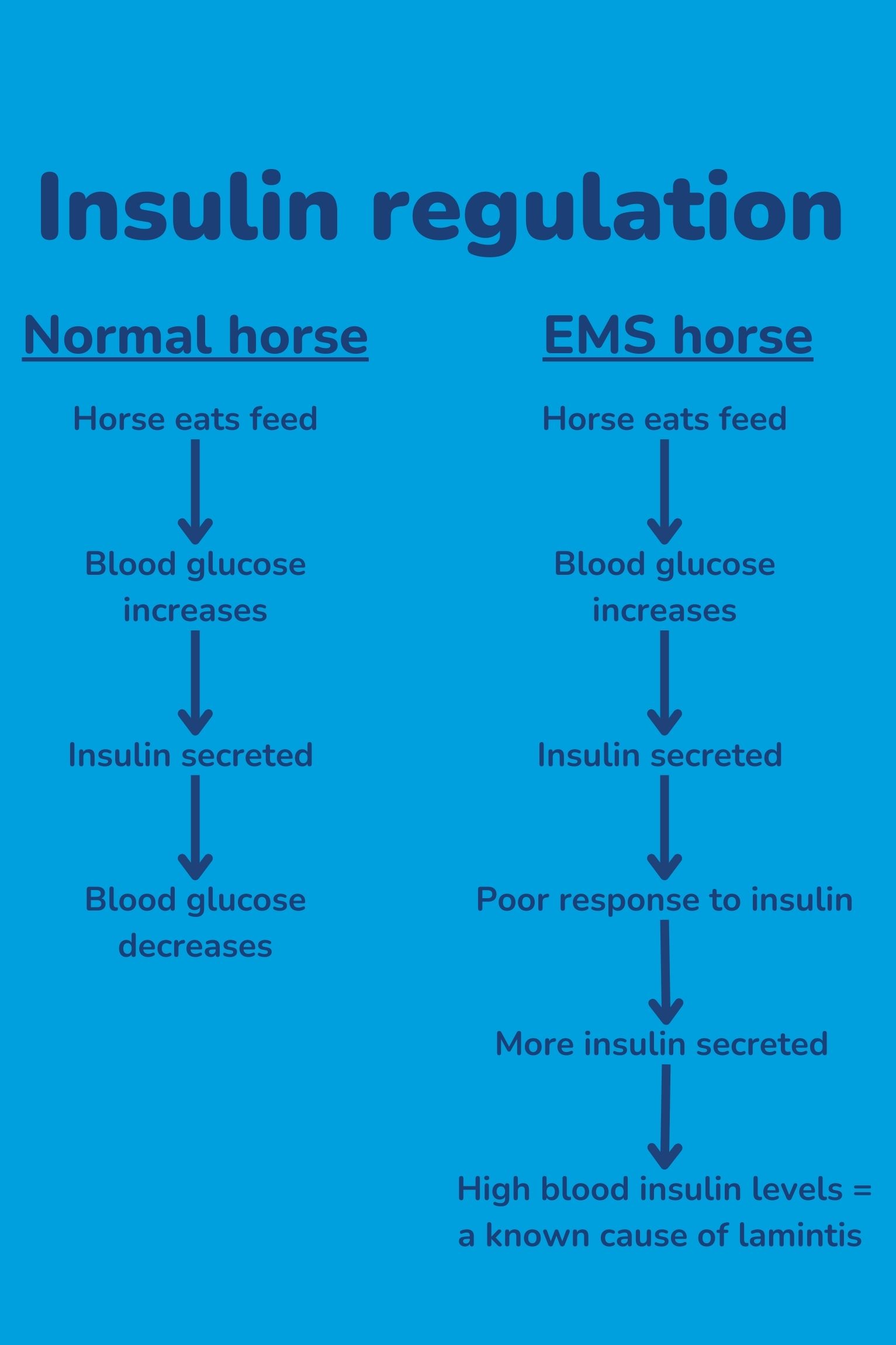
Equine Metabolic Syndrome (EMS) is a complex condition affecting horses and ponies, characterized by insulin dysregulation and an increased risk of laminitis. Insulin dysregulation in EMS leads to abnormal responses to dietary carbohydrates, causing increased insulin secretion and elevated blood glucose levels. This imbalance can result in clinical signs such as obesity, regional fat deposition, infertility, and laminitis.

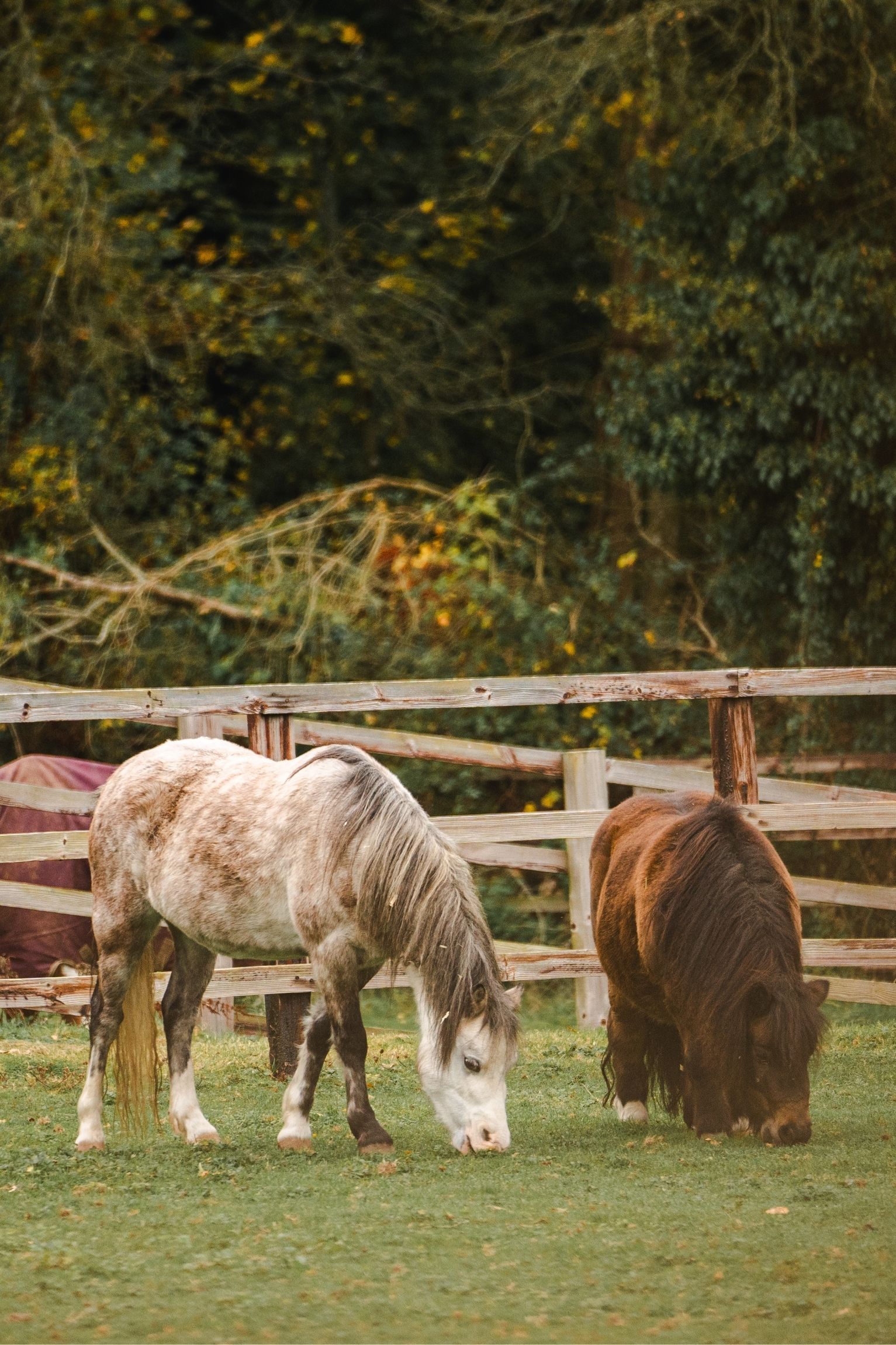
EMS is often seen in Native breeds such as Welsh, Dartmoor and Shetland ponies, as well as in certain horse breeds like Arabian and Warmbloods. However, it can affect horses of any breed or age.

Key Highlights

EMS involves insulin dysregulation and a high risk of laminitis, especially in ponies and overweight horses.

Risk factors include obesity, breed predisposition, and high-NSC diets (e.g., sugary/starchy feeds).

Signs include a cresty neck, fat pads, and recurrent laminitis.
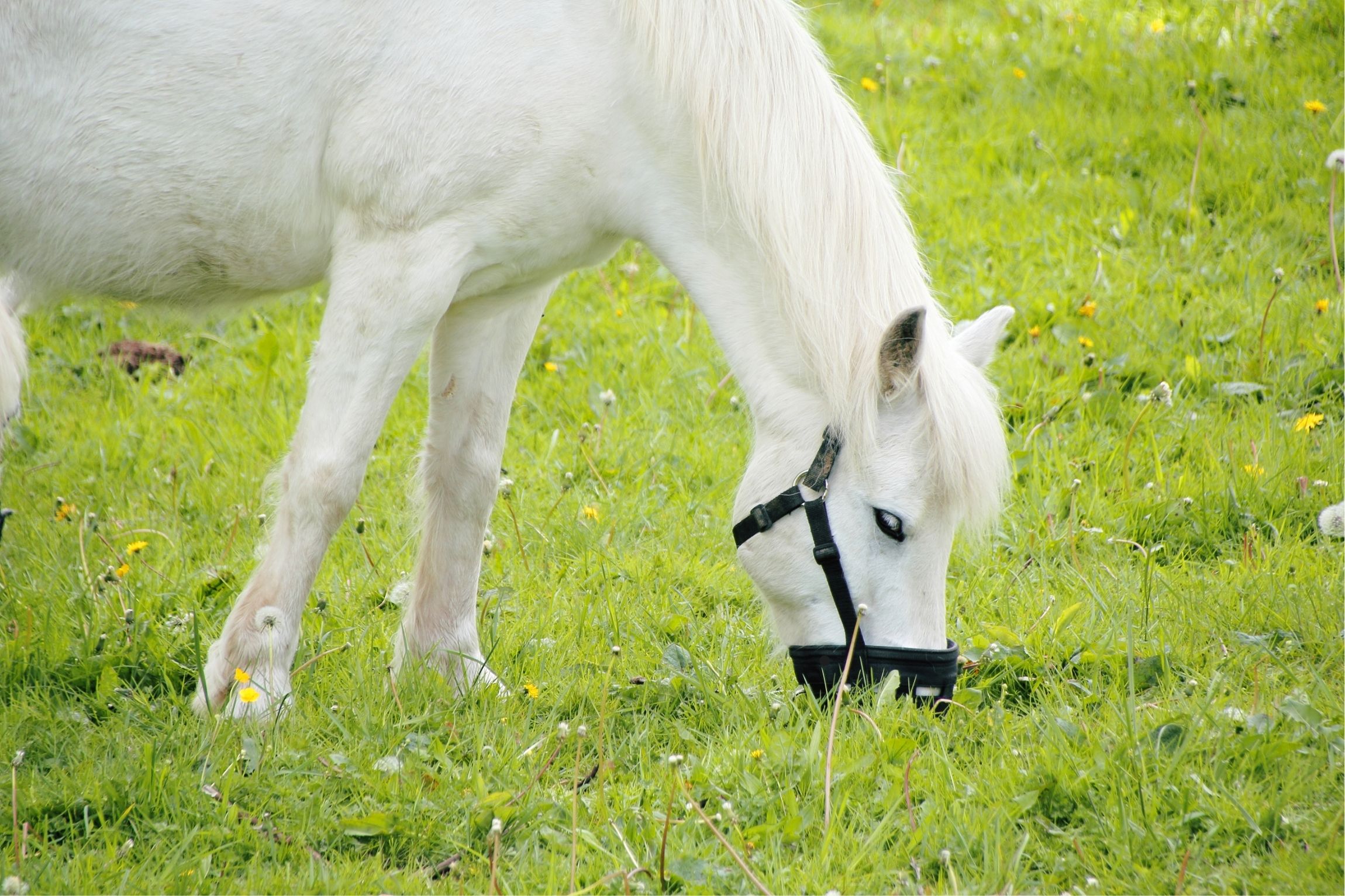
Management focuses on diet, weight loss, exercise, and vet care to reduce risks and support long-term wellbeing.
Understanding EMS

EMS is an endocrine disorder where horses struggle to regulate the release of insulin. In normal horses, insulin prompts tissue to absorb glucose after a meal. With EMS, fat deposits release hormones that interfere with tissue response to insulin, causing “insulin resistance”. The pancreas increases insulin release to counteract this, resulting in elevated insulin levels after meals and sometimes throughout the day. This mirrors metabolic issues in human type 2 diabetes.

Causes and Risk Factors of Equine Metabolic Syndrome (EMS)

Equine metabolic syndrome (EMS) has various causes and risk factors, including both genetic predisposition and environmental influences. While the exact underlying mechanisms are not fully understood, research suggests that EMS is a multifactorial condition with complex interactions between genetics, diet, and other factors.

Genetic Predisposition

Genetics play a significant role in the development of equine metabolic syndrome (EMS). Certain breeds, such as ponies, donkeys and Arabians, are more susceptible to EMS due to their genetic makeup. These breeds have evolved in harsh environments where resources were limited, leading to a higher efficiency in metabolizing dietary carbohydrates and storing energy.

Within these breeds, there may be individual horses with specific genetic factors that contribute to their inability to respond properly to dietary carbohydrates. These hereditary factors can result in insulin dysregulation and increased risk of developing EMS.

While genetic predisposition is a significant factor, it is essential to note that environmental influences and lifestyle factors also contribute to the development and progression of EMS. Therefore, a holistic approach that considers both genetic and environmental factors is necessary for managing EMS in horses.

Obesity

Obesity in horses can lead to Equine Metabolic Syndrome (EMS) primarily due to its role in promoting insulin resistance. Excess adipose tissue releases inflammatory substances and hormones, which interfere with insulin signalling pathways. This insulin resistance causes cells to become less responsive to insulin, leading to elevated insulin levels as the pancreas compensates. Chronic high insulin levels are a key feature of EMS and contribute to metabolic disturbances such as increased fat deposition.

Dietary Factors

Diets high in easily digestible carbohydrates, such as cereals and rich grass, can overwhelm the horse’s digestive system and lead to spikes in blood glucose levels. This frequent exposure to high-carbohydrate meals can result in insulin resistance over time, as the cells become less responsive to insulin’s signals to take up glucose. Consequently, the pancreas compensates by producing more insulin to regulate blood sugar levels, which can eventually lead to elevated insulin concentrations – a clinical sign of EMS.

Lack of Exercise

The lack of exercise contributes to EMS by reducing insulin sensitivity in horses. Regular physical activity is essential for maintaining insulin sensitivity by promoting glucose uptake into muscles, which helps regulate blood glucose levels effectively. Without adequate exercise, muscles become less responsive to insulin, leading to insulin resistance. This resistance prompts the pancreas to produce more insulin to compensate, eventually resulting in elevated insulin levels—a key characteristic of EMS. Additionally, sedentary horses are more prone to obesity as unused energy from feed is stored as fat, exacerbating insulin resistance and further increasing the risk of EMS.
Recognising clinical signs of EMS

Recognising the clinical signs of EMS is crucial for early diagnosis and effective management. Here are some important symptoms to watch out for:

Obesity:

Excess body fat accumulation, particularly around the neck crest, tailhead, and along the back.

Insulin Dysregulation:

Elevated fasting insulin levels or abnormal response to glucose or insulin challenges.

Laminitis:

Recurrent or chronic inflammation of the hoof laminae, leading to lameness and characteristic hoof changes.

Reproductive Issues:

Reduced fertility or irregular estrous cycles in mares.

Hyperlipidemia:

Elevated blood lipid levels, often associated with insulin resistance.

Increased Risk of Infections:

Due to impaired immune function associated with insulin dysregulation.

Exercise Intolerance:

Decreased stamina or reluctance to exercise, which may exacerbate obesity and insulin resistance.

Muscle Wasting:

In some cases, horses with EMS may exhibit muscle loss despite adequate nutrition, due to altered metabolic processes.

Management and Prevention Strategies

Exercise Strategies

Exercise plays a crucial role in managing EMS primarily by improving insulin sensitivity and promoting weight loss. Strategies include daily turnout in with controlled grazing, which encourages natural movement and reduces obesity risk. Incorporating regular sessions of walking, trotting, and occasional cantering helps improve cardiovascular fitness and muscle tone without undue stress on joints. Additional activities such as lunging, groundwork, hacking on varied terrain, and in-hand work with obstacles provide mental stimulation, enhance coordination, and promote muscle development. For horses needing low-impact options, swimming offers a beneficial alternative. It’s crucial to monitor each horse’s response, gradually increase exercise intensity to prevent injury.

While medications that improve insulin sensitivity are used in human metabolic syndrome, their  efficacy in horses, such as metformin, remains uncertain due to absorption concerns. Various supplements like chromium, magnesium, cinnamon, and chasteberry extract have been suggested for EMS in horses, but current evidence does not support their efficacy, and their use cannot be recommended.
Diagnosis of EMS

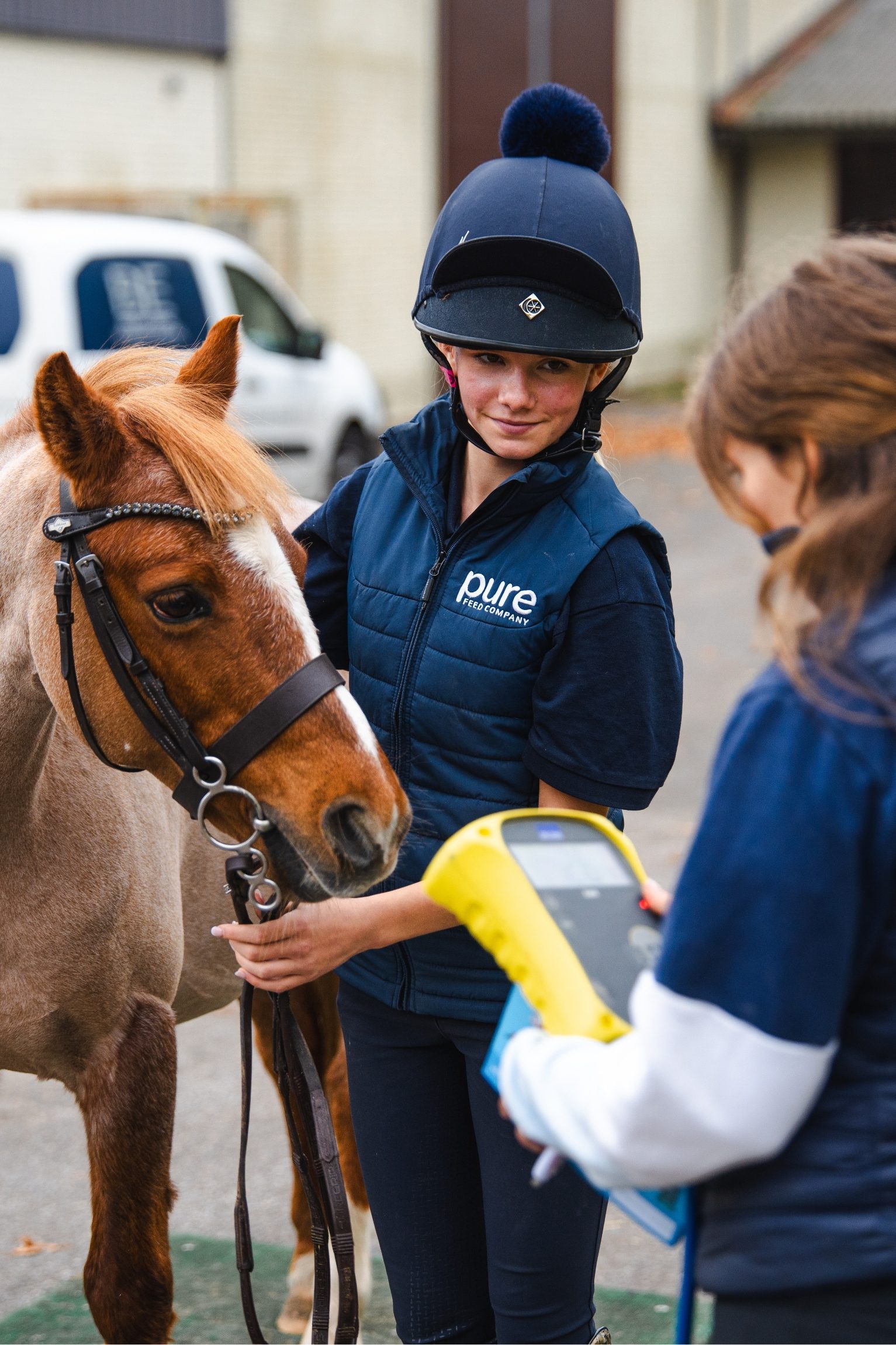
Diagnosing EMS typically begins with an assessment based on the appearance of obesity and a history of laminitis. To confirm EMS and assess insulin resistance accurately, testing should be conducted after the horse has fasted and is not in pain or stressed (e.g., during a laminitis episode). Diagnostic methods include:
Single Blood Sample:

This initial test measures insulin and glucose levels to evaluate the risk of developing laminitis. However, some horses with EMS may have normal insulin levels, making this method less reliable alone.

Oral Glucose Challenge Test:

This test provides a more accurate assessment by measuring insulin response to a glucose meal. Blood is drawn, typically two hours after feeding glucose, to determine insulin concentration.

Additional Laboratory Tests:

Blood samples can also be analysed for elevated levels of fats and hormones other than insulin, which are characteristic of EMS. These tests help differentiate EMS from other conditions, including Pituitary Pars Intermedia Dysfunction (PPID).

Radiographs:

X-rays may be taken to confirm laminitis and assess structural changes in the hooves, providing further diagnostic clarity.

Dietary Strategies for a Horse with EMS

The key principles for preventing and treating Equine Metabolic Syndrome (EMS) are straightforward: implement dietary restriction and encourage regular exercise. These measures not only promote weight loss but also enhance overall fitness, improving insulin responsiveness.

Dietary Adjustments:

Providing a low-NSC (non-structural carbohydrate) diet, predominantly comprising high-fibre forage, is crucial. This approach helps regulate blood glucose and insulin levels, facilitating weight loss and reducing the risk of laminitis.

Did you know all of Pure Feed’s low calorie range is suitable for horses with EMS?

Limiting field access, especially during periods of lush growth such as Spring, helps control carbohydrate intake and prevent insulin spikes.

Ensuring a balanced intake of essential nutrients to support metabolic balance.

Did you know all of Pure Feeds complete feeds already contain a balancer! So already contain all of the essential nutrients required!

Omega-3 fatty acid supplementation, sourced from fish oil or linseed oil, may further reduce inflammation, improve insulin sensitivity, and enhance cardiovascular function in horses with EMS.

Pure Linseed is a great source of Omega 3 – and a little goes a long way! Check it out here

Managing insulin spikes with strategies like feeding frequent small meals helps promotes stable blood glucose levels, contributing to effective EMS management.

Consider weight loss strategies such as using a grazing muzzle, soaking hay and triple netting to help control obesity.

Conclusion

In conclusion, managing EMS requires a well-rounded approach. Early recognition of clinical symptoms, like obesity and recurrent laminitis is key for timely treatment. Effective management includes providing a low-NSC (non-structural carbohydrate) diet, limiting field access, ensuring a balanced intake of essential nutrients, and supplementing with omega-3 fatty acids. Regular, appropriate exercise enhances insulin sensitivity and aids in weight loss. Consistent monitoring and veterinary guidance are essential to prevent complications like laminitis and to improve the horse’s overall health.

Made in the UK

We are proud to say that all of our feeds are produced here in the UK

FREE Shipping

We offer FREE SHIPPING for all orders in the UK with 15 bags and over*

Sustainable

We are dedicated to playing our part in making the world more sustainable

100% Natural

We use high-quality ingredients and no unnecessary additives.

Thousands of people love our feeds

May just got better 🌱
£5 off Pure Stud, all month long!Complete nutrition for youngstock, mares & stallions… without the extras you don’t want.✔ No cereals
✔ No molasses
✔ No soya or alfalfa
✔ Low sugar & starchAvailable in-store & online 🩵

May just got better 🌱
£5 off Pure Stud, all month long!

Complete nutrition for youngstock, mares & stallions… without the extras you don’t want.

✔ No cereals
✔ No molasses
✔ No soya or alfalfa
✔ Low sugar & starch

Available in-store & online 🩵
...

17 0
Did you know the sugar in grass isn’t constant?It rises and falls throughout the day, driven by photosynthesis and temperature. Early morning (6–10 am), photosynthesis hasn’t yet packed the grass with soluble sugars, so grazing is generally lower risk and a safer window for horses prone to laminitis or weight gain.Between late morning and late afternoon (11–5 pm), sunlight drives sugar production. Levels climb steadily, meaning horses grazing during this period should be monitored closely, especially those with metabolic sensitivities.By evening and overnight (18–05 am), grass sugar can peak. Cooler nights trap sugars in the plant, creating a riskier forage for susceptible horses. Grazing unmanaged during this window can overload the horse’s system and trigger laminitis.Understanding these daily sugar fluctuations allows you to manage turnout strategically, protect gut and metabolic health.

Did you know the sugar in grass isn’t constant?

It rises and falls throughout the day, driven by photosynthesis and temperature. Early morning (6–10 am), photosynthesis hasn’t yet packed the grass with soluble sugars, so grazing is generally lower risk and a safer window for horses prone to laminitis or weight gain.

Between late morning and late afternoon (11–5 pm), sunlight drives sugar production. Levels climb steadily, meaning horses grazing during this period should be monitored closely, especially those with metabolic sensitivities.

By evening and overnight (18–05 am), grass sugar can peak. Cooler nights trap sugars in the plant, creating a riskier forage for susceptible horses. Grazing unmanaged during this window can overload the horse’s system and trigger laminitis.

Understanding these daily sugar fluctuations allows you to manage turnout strategically, protect gut and metabolic health.
...

335 1
Growth places specific nutritional demands on young horses, requiring a precise balance of energy, protein, vitamins and minerals to support correct development.Pure Stud is formulated to deliver this in a controlled way; high in fibre to support the digestive system, low in sugar and starch to avoid unnecessary peaks in blood glucose and insulin, and with a built-in stud balancer to provide essential vitamins, minerals and quality amino acids.This supports steady growth rates, skeletal development, and muscle formation without relying on high-starch, high-calorie formulations.A consistent, balanced approach to nutrition during growth is key to supporting long-term soundness and development.

Growth places specific nutritional demands on young horses, requiring a precise balance of energy, protein, vitamins and minerals to support correct development.

Pure Stud is formulated to deliver this in a controlled way; high in fibre to support the digestive system, low in sugar and starch to avoid unnecessary peaks in blood glucose and insulin, and with a built-in stud balancer to provide essential vitamins, minerals and quality amino acids.

This supports steady growth rates, skeletal development, and muscle formation without relying on high-starch, high-calorie formulations.

A consistent, balanced approach to nutrition during growth is key to supporting long-term soundness and development.
...

32 0
One bag. No gaps. No guesswork.Feeding shouldn’t feel like a balancing act. That’s why our feeds are built differently - truly complete, with everything your horse needs in every single mouthful:🌱 Multiple fibre sources (grass pellets + chaff) for gut health and chew time
⚡ Slow-release energy from linseed, rapeseed oil & unmolassed sugar beet
🧬 A fully balanced vitamin & mineral package
💪 Essential amino acids for muscle support
🦶 Biotin for strong hooves
🧂 Salt for hydration and electrolyte balance
🦠 Pre & probiotics for optimal digestionNo extras. No add-ons. Just Pure Feed 🩵

One bag. No gaps. No guesswork.

Feeding shouldn’t feel like a balancing act. That’s why our feeds are built differently - truly complete, with everything your horse needs in every single mouthful:

🌱 Multiple fibre sources (grass pellets + chaff) for gut health and chew time
⚡ Slow-release energy from linseed, rapeseed oil & unmolassed sugar beet
🧬 A fully balanced vitamin & mineral package
💪 Essential amino acids for muscle support
🦶 Biotin for strong hooves
🧂 Salt for hydration and electrolyte balance
🦠 Pre & probiotics for optimal digestion

No extras. No add-ons. Just Pure Feed 🩵
...

30 0
If you’ve ever owned a good-doer, you’ll know… they don’t miss a meal. Not ever.Spring grass comes through, the sun appears, and suddenly, what should be a simple turnout becomes a stressful balancing act.For some, that starts with a muzzle. Not to restrict completely, but to slow things down – turning every bite into a more considered mouthful.For others, it’s strip grazing. Walking the fence line forward inch by inch, controlling access to fresh grass and keeping intake steady rather than excessive.Then there’s hay, soaked to reduce sugar levels, making it a safer, more suitable forage option when you need to take the edge off.Some horses thrive in dry paddocks, where grass intake is minimal but movement and turnout are still part of their routine. Others benefit from a little more time stabled, where you can fully manage what goes in and when.All of these approaches share the same underlying principle: restriction. You’re limiting intake to manage weight, sugar exposure, and overall health. But it’s easy to forget what else gets restricted at the same time. When you reduce grass, soak hay, or limit access to forage, you’re not just cutting calories and sugars, you’re also reducing the intake of essential vitamins, minerals, and amino acids that your horse would naturally pick up throughout the day.Over time, that gap can start to show. Hoof quality, coat condition, muscle maintenance, even energy levels and recovery, they’re all influenced by those nutrients that are no longer consistently coming in. This is where a low calorie balancer, like Pure Balance comes in. It's job is to fill in these nutrition gaps and help provide your horse with everything they need, in a low calorie format 🩵

If you’ve ever owned a good-doer, you’ll know… they don’t miss a meal. Not ever.

Spring grass comes through, the sun appears, and suddenly, what should be a simple turnout becomes a stressful balancing act.

For some, that starts with a muzzle. Not to restrict completely, but to slow things down – turning every bite into a more considered mouthful.

For others, it’s strip grazing. Walking the fence line forward inch by inch, controlling access to fresh grass and keeping intake steady rather than excessive.

Then there’s hay, soaked to reduce sugar levels, making it a safer, more suitable forage option when you need to take the edge off.

Some horses thrive in dry paddocks, where grass intake is minimal but movement and turnout are still part of their routine. Others benefit from a little more time stabled, where you can fully manage what goes in and when.

All of these approaches share the same underlying principle: restriction. You’re limiting intake to manage weight, sugar exposure, and overall health. But it’s easy to forget what else gets restricted at the same time. When you reduce grass, soak hay, or limit access to forage, you’re not just cutting calories and sugars, you’re also reducing the intake of essential vitamins, minerals, and amino acids that your horse would naturally pick up throughout the day.

Over time, that gap can start to show. Hoof quality, coat condition, muscle maintenance, even energy levels and recovery, they’re all influenced by those nutrients that are no longer consistently coming in. This is where a low calorie balancer, like Pure Balance comes in. It`s job is to fill in these nutrition gaps and help provide your horse with everything they need, in a low calorie format 🩵
...

30 0
✨ Pure Fibre Balance - high-fibre, low-calorie feed for good doers! ✨
Combines our premium balancer pellets (vitamins, minerals, pre/probiotics, biotin, amino acids, salt) with low-calorie chaff for extra fibre to provide steady, slow-release energy (no fizz) = ideal for good doers & laminitis-prone horses🚫 Cereal & molasses free, no preservatives – all the nutrition, none of the empty calories 🩵

✨ Pure Fibre Balance - high-fibre, low-calorie feed for good doers! ✨
Combines our premium balancer pellets (vitamins, minerals, pre/probiotics, biotin, amino acids, salt) with low-calorie chaff for extra fibre to provide steady, slow-release energy (no fizz) = ideal for good doers & laminitis-prone horses

🚫 Cereal & molasses free, no preservatives – all the nutrition, none of the empty calories 🩵
...

29 1
A good session doesn’t end when you untack.
Work takes more out of your horse than you can always see: fluid loss through sweat, muscles under strain, and a digestive system that’s more sensitive post-exercise.That’s where Refuel comes in.Supporting faster muscle recovery, replenishing electrolytes for effective hydration, and formulated to be gut safe, it helps your horse recover properly 🩵

A good session doesn’t end when you untack.
Work takes more out of your horse than you can always see: fluid loss through sweat, muscles under strain, and a digestive system that’s more sensitive post-exercise.

That’s where Refuel comes in.

Supporting faster muscle recovery, replenishing electrolytes for effective hydration, and formulated to be gut safe, it helps your horse recover properly 🩵
...

25 0
Both Fibre Balance and Easy are part of our low calorie range but which suits your horse?Pure Fibre Balance is built for good-doers who don’t need extra energy - low calorie, high fibre, fully balanced, and ideal for those in light work or at maintenance. It is like feeding a full cup of balancer with a handful of chaff. Everything your horse needs in one measured portion: high fibre, low sugar and starch, perfectly balanced.Pure Easy uses the same ingredients, but served at a higher rate – more fibre, more slow-release energy, without adding extra sugar or starch. It’s the choice for horses that need extra bulk and sustained energy, while staying completely balanced and gut-friendly.Not sure which would be best for your horse? Comment 'DIET PLAN' to recieve a link to our diet plan 🩵

Both Fibre Balance and Easy are part of our low calorie range but which suits your horse?

Pure Fibre Balance is built for good-doers who don’t need extra energy - low calorie, high fibre, fully balanced, and ideal for those in light work or at maintenance. It is like feeding a full cup of balancer with a handful of chaff. Everything your horse needs in one measured portion: high fibre, low sugar and starch, perfectly balanced.

Pure Easy uses the same ingredients, but served at a higher rate – more fibre, more slow-release energy, without adding extra sugar or starch. It’s the choice for horses that need extra bulk and sustained energy, while staying completely balanced and gut-friendly.

Not sure which would be best for your horse? Comment `DIET PLAN` to recieve a link to our diet plan 🩵
...

34 0
Different workloads, different grazing, different quirks that make “one size fits all” feeding… not quite fit at all. That’s usually where the questions start."Am I feeding too much? Not enough? The right balance?"Our diet plan service takes the guesswork out of it. A quick, simple form, reviewed by our nutritionists, and within a day, you’ve got a plan built specifically for your horse – their needs, their lifestyle, their routine.👉 Comment 'DIET PLAN' to find out more 🩵

Different workloads, different grazing, different quirks that make “one size fits all” feeding… not quite fit at all. That’s usually where the questions start.

"Am I feeding too much? Not enough? The right balance?"

Our diet plan service takes the guesswork out of it. A quick, simple form, reviewed by our nutritionists, and within a day, you’ve got a plan built specifically for your horse – their needs, their lifestyle, their routine.

👉 Comment `DIET PLAN` to find out more 🩵
...

23 0
Keep your good doers in top condition without overloading them with calories! 🌿🐴Pure Easy is a low-calorie, low sugar and starch feed designed specifically for horses that gain weight easily. Despite the lower calories, it provides steady, slow-release energy from high-quality fibre and superfibre sources, perfect for horses in light to medium work.It also contains a built-in balancer packed with essential vitamins, minerals, pre- & probiotics to support the gut microbiome, biotin for strong hooves, key amino acids for muscle maintenance, and added salt to help hydration.This carefully formulated feed lets you give your horse the energy they need to perform, without risking excess weight gain , all in one simple, easy feed! 🩵

Keep your good doers in top condition without overloading them with calories! 🌿🐴

Pure Easy is a low-calorie, low sugar and starch feed designed specifically for horses that gain weight easily. Despite the lower calories, it provides steady, slow-release energy from high-quality fibre and superfibre sources, perfect for horses in light to medium work.

It also contains a built-in balancer packed with essential vitamins, minerals, pre- & probiotics to support the gut microbiome, biotin for strong hooves, key amino acids for muscle maintenance, and added salt to help hydration.

This carefully formulated feed lets you give your horse the energy they need to perform, without risking excess weight gain , all in one simple, easy feed! 🩵
...

33 1
Did you know Vitamin E, or Tocopheryl, is crucial for your horse’s overall health? All Pure Complete feeds include it in our balancer, ensuring your horse gets the benefits every day:👉 Protects cells from oxidative stress – helping to neutralise free radicals.
👉 Supports muscle function and recovery – essential for exercise and stamina.
👉 Maintains a normal immune system – keeping your horse strong and resilient.Including Vitamin E in every feed means your horse receives targeted antioxidant support alongside all the vitamins, minerals, and nutrients in our balancer. Perfect for keeping horses happy and performing at their best! 🌿

Did you know Vitamin E, or Tocopheryl, is crucial for your horse’s overall health? All Pure Complete feeds include it in our balancer, ensuring your horse gets the benefits every day:

👉 Protects cells from oxidative stress – helping to neutralise free radicals.
👉 Supports muscle function and recovery – essential for exercise and stamina.
👉 Maintains a normal immune system – keeping your horse strong and resilient.

Including Vitamin E in every feed means your horse receives targeted antioxidant support alongside all the vitamins, minerals, and nutrients in our balancer. Perfect for keeping horses happy and performing at their best! 🌿
...

26 0
Refuel comes with a splash zone warning!
A recovery mash horses just can't get enough of! Packed with electrolytes, antioxidants and amino acids, Refuel works hard to keep your horse in tip top shape!We would love to see a photo of your horse after a bowl of Refuel, drop them in the comments below 👇

Refuel comes with a splash zone warning!
A recovery mash horses just can`t get enough of! Packed with electrolytes, antioxidants and amino acids, Refuel works hard to keep your horse in tip top shape!

We would love to see a photo of your horse after a bowl of Refuel, drop them in the comments below 👇
...

49 0
Did you know we use linseed in all of our feeds? Linseed is a powerhouse ingredient that brings multiple benefits to every feed. Here’s why we use it in all Pure Feed products:1️⃣ Natural binder: Linseed contains mucilage, a sticky soluble fibre that binds feed pellets together naturally. This eliminates the need for molasses, so we can produce stable, consistent pellets without added sugar. For horses, this means better metabolic health and reduced risk of sugar-related issues.2️⃣ Rich in Omega-3 fatty acids: Linseed provides essential fatty acids that support skin, coat, joint, and heart health, while also helping to maintain a normal inflammatory balance.3️⃣ Gut-friendly fibre: The soluble fibre in linseed acts as a prebiotic, supporting beneficial gut microbes and improving nutrient absorption.By using linseed instead of molasses, we combine function, nutrition, and safety, creating a feed that’s not only easier to handle and more palatable but also better for your horse’s long-term wellbeing!

Did you know we use linseed in all of our feeds? Linseed is a powerhouse ingredient that brings multiple benefits to every feed. Here’s why we use it in all Pure Feed products:

1️⃣ Natural binder: Linseed contains mucilage, a sticky soluble fibre that binds feed pellets together naturally. This eliminates the need for molasses, so we can produce stable, consistent pellets without added sugar. For horses, this means better metabolic health and reduced risk of sugar-related issues.

2️⃣ Rich in Omega-3 fatty acids: Linseed provides essential fatty acids that support skin, coat, joint, and heart health, while also helping to maintain a normal inflammatory balance.

3️⃣ Gut-friendly fibre: The soluble fibre in linseed acts as a prebiotic, supporting beneficial gut microbes and improving nutrient absorption.

By using linseed instead of molasses, we combine function, nutrition, and safety, creating a feed that’s not only easier to handle and more palatable but also better for your horse’s long-term wellbeing!
...

62 0
Feeding shouldn’t feel like a shopping list that never ends.
With many traditional feeding setups, you’re layering product after product: a base mix, a balancer, added oil, digestive support, biotin, muscle support… the list goes on. Not only is this way of feeding complicated, but it’s also easy to overdo or miss key nutrients.We do things differently.Pure Feed is designed to deliver everything your horse needs in one bag, combining high-quality fibre, essential vitamins and minerals, oils, and functional ingredients to support digestion, condition, and overall health.That’s 6+ nutritional products, working together in a balanced way. No guesswork, no over-supplementing, no complicated routines.Just a simpler, more effective way to feed.

Feeding shouldn’t feel like a shopping list that never ends.
With many traditional feeding setups, you’re layering product after product: a base mix, a balancer, added oil, digestive support, biotin, muscle support… the list goes on. Not only is this way of feeding complicated, but it’s also easy to overdo or miss key nutrients.

We do things differently.

Pure Feed is designed to deliver everything your horse needs in one bag, combining high-quality fibre, essential vitamins and minerals, oils, and functional ingredients to support digestion, condition, and overall health.

That’s 6+ nutritional products, working together in a balanced way. No guesswork, no over-supplementing, no complicated routines.

Just a simpler, more effective way to feed.
...

50 3
Ever wondered why a horse can seem fine on one day of spring grazing, but at risk the next? The answer lies in the grass itself.In the early morning, grass sugar levels are at their lowest; the plant has used stored energy overnight. By the afternoon, sunlight drives photosynthesis, and sugar levels can spike dramatically. Young, lush spring grass is even trickier: rapid growth plus changing sunlight and rainfall means sugar levels can swing from low to dangerously high in a matter of hours.For laminitis-prone horses, these swings matter. Sudden spikes in blood glucose trigger insulin surges, which can stress the sensitive tissues in the hoof and spark laminitis episodes. It’s not just about what your horse eats, but when and under what conditions the grass grows.What you can do: Monitor your field, watch the weather, and consider timing and duration of grazing. Understanding these natural sugar fluctuations is one of the most effective ways to protect hoof health!

Ever wondered why a horse can seem fine on one day of spring grazing, but at risk the next? The answer lies in the grass itself.

In the early morning, grass sugar levels are at their lowest; the plant has used stored energy overnight. By the afternoon, sunlight drives photosynthesis, and sugar levels can spike dramatically. Young, lush spring grass is even trickier: rapid growth plus changing sunlight and rainfall means sugar levels can swing from low to dangerously high in a matter of hours.

For laminitis-prone horses, these swings matter. Sudden spikes in blood glucose trigger insulin surges, which can stress the sensitive tissues in the hoof and spark laminitis episodes. It’s not just about what your horse eats, but when and under what conditions the grass grows.

What you can do: Monitor your field, watch the weather, and consider timing and duration of grazing. Understanding these natural sugar fluctuations is one of the most effective ways to protect hoof health!
...

76 2
We’ve seen a few posts lately saying straw shouldn’t be fed to horses… and it’s left a lot of people second-guessing what they’re doing.But straw isn’t some new or risky trend; it’s actually been used for years, and for good reason.Quite simply, straw is very low in calories but still provides fibre. That makes it really useful for horses that hold weight easily, need their intake controlled, or are on restricted diets. By adding straw into a forage ration, you can bulk it out without piling in extra energy and calories.It also takes horses longer to chew. That means more time eating, more saliva production, and a more natural, trickle-feeding pattern, all of which support digestive health and help prevent long periods without forage.That’s why you’ll often see straw used alongside hay or haylage, rather than instead of it. It helps slow things down and stretch the ration out.Of course, it’s not for every horse. It needs to be good quality, introduced gradually, and fed appropriately. But when it’s used correctly, it’s a really practical add in to your horse's diet.If you’re not sure whether straw has a place in your horse’s diet, just ask 👇

We’ve seen a few posts lately saying straw shouldn’t be fed to horses… and it’s left a lot of people second-guessing what they’re doing.

But straw isn’t some new or risky trend; it’s actually been used for years, and for good reason.

Quite simply, straw is very low in calories but still provides fibre. That makes it really useful for horses that hold weight easily, need their intake controlled, or are on restricted diets. By adding straw into a forage ration, you can bulk it out without piling in extra energy and calories.

It also takes horses longer to chew. That means more time eating, more saliva production, and a more natural, trickle-feeding pattern, all of which support digestive health and help prevent long periods without forage.

That’s why you’ll often see straw used alongside hay or haylage, rather than instead of it. It helps slow things down and stretch the ration out.

Of course, it’s not for every horse. It needs to be good quality, introduced gradually, and fed appropriately. But when it’s used correctly, it’s a really practical add in to your horse`s diet.

If you’re not sure whether straw has a place in your horse’s diet, just ask 👇
...

72 0

What people say about Pure Feed

A much easier way of feeding
We bought a bag the day after I received the diet plan after she completely refused to eat her previous feed anymore and was practically starving herself. I have been slowly increasing the amount of the pure easy I've been ...
Read More
Cerys
We bought a bag the day after I received the diet plan after she completely refused to eat her previous feed anymore and was practically starving herself. I have been slowly increasing the amount of the pure easy I've been giving her and so far she's loving it! It's a much easier way of feeding, very impressed!
A much easier way of feeding
Cerys
Loving Pure Feed and his tummy is too!
Herbert has been on the Pure condition pellets for a week now and is loving it. His tummy is too, as no faecal water at all - rear end lovely and clean. I'm ordering a pure linseed with my next ...
Read More
Sue
Herbert has been on the Pure condition pellets for a week now and is loving it. His tummy is too, as no faecal water at all - rear end lovely and clean. I'm ordering a pure linseed with my next order. He's having some time off to get some weight on and is out on some grass in the middle of the tracks during the day. Thanks so much Pure Feed!
Loving Pure Feed and his tummy is too!
Sue
A huge improvement in her temperament and skin!
Bonnie is doing amazing on it! I started using it around 3 weeks ago and already there is a huge improvement in her temperament and skin! She still has enough energy for hacking 4 days a week and hunting every weekend too!
Sabrina
Bonnie is doing amazing on it! I started using it around 3 weeks ago and already there is a huge improvement in her temperament and skin! She still has enough energy for hacking 4 days a week and hunting every weekend too!
A huge improvement in her temperament and skin!
Sabrina
My pony has never looked or moved better!
I have been using your feed for 3 years now and I can say that my 25 year old pony has never looked or moved better. He really struggles with the winter so we have him your micronised linseed alongside his pure ...
Read More
Polly
I have been using your feed for 3 years now and I can say that my 25 year old pony has never looked or moved better. He really struggles with the winter so we have him your micronised linseed alongside his pure veteran and his coat and weight maintenance was superb. With the two new ponies we have started to transition them over to the feeds recommended in the diet plan and they seem very happy. It is so reassuring to know that the ponies are getting everything that they need from your feed. So thank you and for all of your advice and knowledge.
My pony has never looked or moved better!
Polly
All look marvellous!
Everything marvellous they are all doing great. Just like it even better when your feed is on offer the gang are looking great with lovely shiny coats
Joyce Simpson
Everything marvellous they are all doing great. Just like it even better when your feed is on offer the gang are looking great with lovely shiny coats
All look marvellous!
Joyce Simpson
I can see a huge difference and improvement
I can see a huge difference and improvement, body and muscle are looking so much better, nearly too good, and I have noticed he's not hungry all the time as before and eats a bit less hay so saving on ...
Read More
Sophie Ferragut
I can see a huge difference and improvement, body and muscle are looking so much better, nearly too good, and I have noticed he's not hungry all the time as before and eats a bit less hay so saving on money al around. Loving your product!
I can see a huge difference and improvement
Sophie Ferragut
A brilliant system
Absolutely over the moon with it, a brilliant system and perfect for my good doer 10000/10 love it and won't be swapping
Aletheia Gardiner
Absolutely over the moon with it, a brilliant system and perfect for my good doer 10000/10 love it and won't be swapping
A brilliant system
Aletheia Gardiner
Genuinely really impressed with Pure Feed!
I am genuinely really impressed with PureFeed. We have been using Pure Easy for around 2 months now - it's very palatable and my horses energy levels have been good, shiny coat etc! It's very reasonably priced which is one of ...
Read More
Emma McFarlane
I am genuinely really impressed with PureFeed. We have been using Pure Easy for around 2 months now - it's very palatable and my horses energy levels have been good, shiny coat etc! It's very reasonably priced which is one of the main reasons I decided to try it!
Genuinely really impressed with Pure Feed!
Emma McFarlane
Wish I'd found it sooner!
It's so simple!.
Leah William
It's so simple!.
Wish I'd found it sooner!
Leah William
Pure Feed transformed my horse!
My old horse did amazing on it. My new horse is now on your feed too, and I have to say it has transformed him
Sara Constable
My old horse did amazing on it. My new horse is now on your feed too, and I have to say it has transformed him
Pure Feed transformed my horse!
Sara Constable